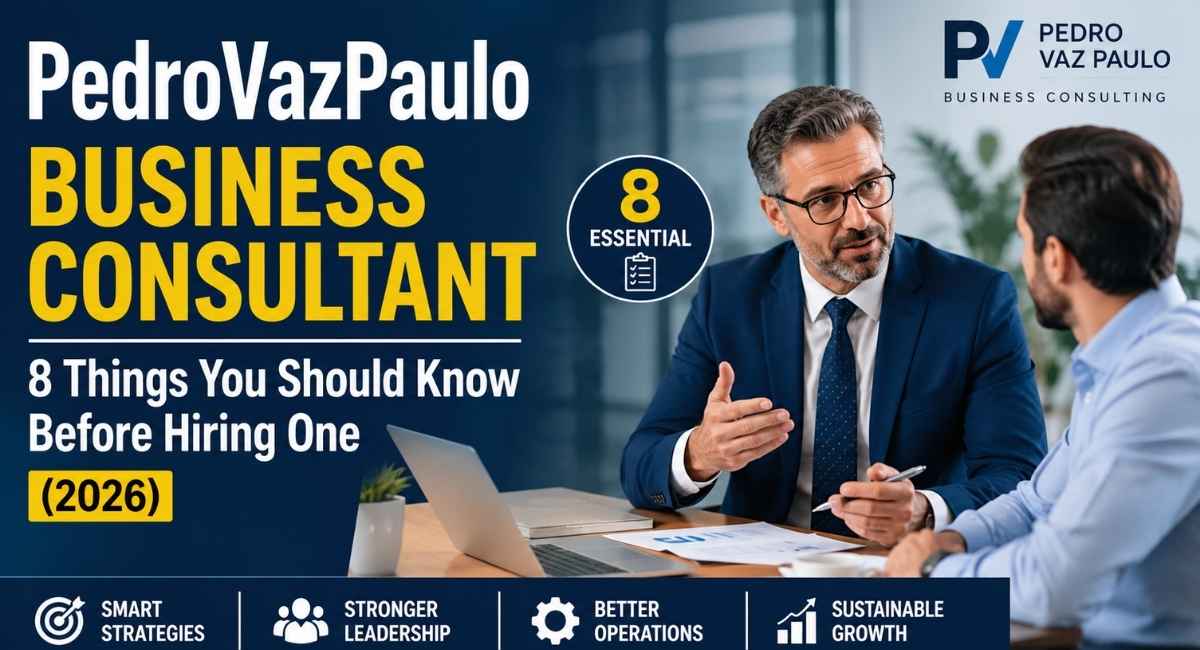
Choosing a business consultant is a decision that affects revenue, team morale, and how fast a company can move. If you have come across PedroVazPaulo business consultant while researching strategic planning, executive coaching, or digital transformation support, you are likely trying to figure out one thing: is this consulting practice actually right for your business.
This guide breaks down what the PedroVazPaulo consulting model does, how the engagement works, what it costs, and how to know if it fits your goals. No filler, no vague promises, just the practical details business owners and leadership teams need before signing a consulting agreement.
Quick Answer
PedroVazPaulo business consultant is a hands-on consulting practice built around three things: business strategy development, executive coaching, and technology integration. The practice works with startups, SMEs, and growing companies that have hit a growth plateau and need a strategic roadmap, not just advice.
Unlike firms that hand over a report and disappear, PedroVazPaulo consulting stays involved through implementation. That means diagnostic audits, KPI tracking, and continuous improvement cycles that connect strategy to actual business performance.
If you need operational efficiency, leadership alignment, and a technology strategy that supports long-term business growth, this consulting engagement is designed for exactly that gap.
What the PedroVazPaulo Business Consultant Practice Actually Does
At its core, PedroVazPaulo business consulting exists to solve one recurring problem: business owners know something is wrong, but cannot pinpoint what or fix it alone.
Most companies do not fail from a shortage of ideas. They stall because of operational bottlenecks, manual processes that eat up time, and leadership teams that are aligned on paper but not in practice. This is where a business advisory relationship becomes valuable.
The consulting practice typically works across four core areas:
- Business strategy development that turns vague ambitions into a strategic roadmap with clear milestones
- Operational excellence, including process optimization and workflow optimization to remove friction from daily operations
- Executive coaching and leadership development for founders and management teams navigating growth
- Technology integration, from automation solutions to cloud technology and AI-driven decision making
Each engagement usually starts with a diagnostic audit. This discovery phase maps out where the business is losing time, money, or clarity before any strategy is proposed. It is a practical starting point, not a generic questionnaire.
The result is a business advisory relationship centered on measurable business results rather than theoretical frameworks.
Strategic Planning and Executive Coaching: The Two Pillars
Two disciplines sit at the center of the PedroVazPaulo consulting approach: strategic planning and executive coaching. Neither works well without the other.
Strategic Planning: Turning Direction Into a Roadmap
Strategic planning here is not a one-time workshop. It is an ongoing process of business model development, market validation, competitive analysis, and customer segmentation that shapes a workable growth strategy.
Common deliverables include:
- A documented strategic roadmap tied to specific business objectives
- Pricing and positioning recommendations based on competitive analysis
- Cash flow modeling and financial planning to support decision-making
- Risk management frameworks for scaling businesses safely
Executive Coaching: Aligning the People Behind the Plan
A strategy is only as strong as the leadership team executing it. Executive coaching addresses internal resistance, leadership buy-in, and communication gaps that quietly slow down implementation.
Leadership coaching sessions typically focus on:
- Decision-making under pressure
- Delegation and organizational efficiency
- Conflict resolution across departments
- Building leadership alignment before major change initiatives
| Strategic Planning | Executive Coaching |
|---|---|
| Sets business direction and goals | Builds leadership capacity to execute |
| Uses data analytics and market research | Uses one-on-one and team coaching |
| Produces a strategic roadmap | Produces stronger decision-making habits |
| Measured through KPI tracking | Measured through team performance and retention |
Together, these two pillars connect business strategy to the people responsible for carrying it out, which is often the missing link in traditional consulting.
The PedroVazPaulo Engagement Process: From Discovery to Implementation
One detail that separates this consulting model from typical advisory firms is how the engagement actually unfolds. It is not a single report handed over at the end.
Step 1: Diagnostic Audit The engagement starts with a deep look at financials, operations, and market position to identify operational bottlenecks and growth opportunities.
Step 2: Strategy Design Findings from the audit shape a strategic roadmap with specific, prioritized recommendations tied to business goals.
Step 3: Implementation Support This is where PedroVazPaulo consulting differs most from conventional firms. Consultants work alongside the internal team on hands-on implementation, not just strategy design.
Step 4: Performance Monitoring KPI tracking and continuous monitoring track whether changes are producing real business performance gains, with adjustments made along the way.
Step 5: Continuous Improvement Even after major milestones are hit, the engagement often shifts into ongoing process improvement and performance management rather than ending abruptly.
This structure matters because strategy without implementation support rarely survives contact with daily operations.
Technology-Integrated Consulting: Why Tech Fluency Now Decides Your Results
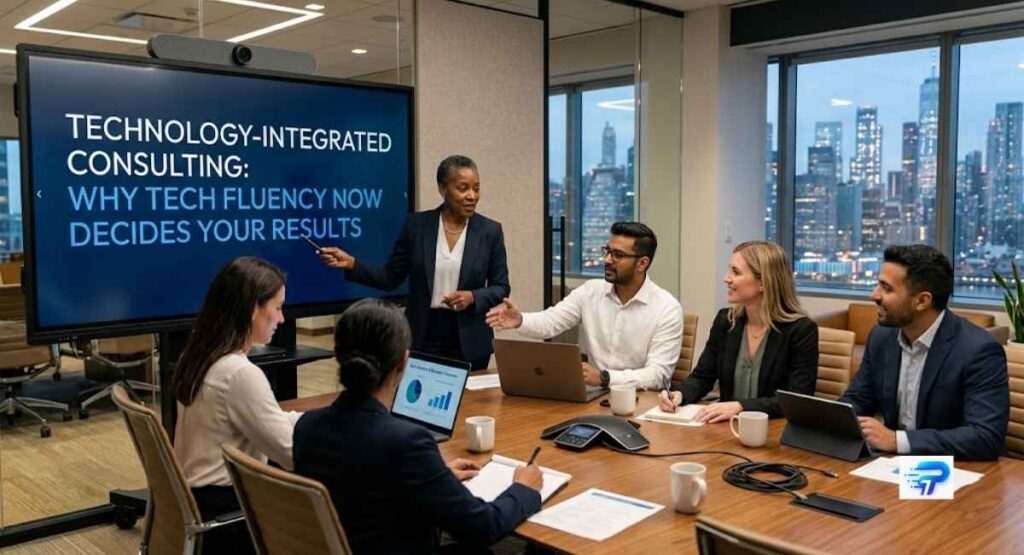
Business strategy without technology strategy no longer holds up. Every operational decision, from customer service to inventory, now runs through some layer of software or data.
PedroVazPaulo business consultant treats technology integration as part of business strategy, not a separate project. This shows up in a few practical ways.
Automation and Process Optimization
Manual processes are one of the biggest hidden costs in growing companies. Automation solutions reduce repetitive work, cut errors, and free up staff time for higher-value tasks. This directly supports cost reduction strategies without cutting headcount.
Data Analytics and AI-Driven Decision Making
Instead of relying on instinct, leadership teams get access to data analytics that inform pricing, staffing, and market expansion decisions. AI-driven decision making does not replace judgment, but it removes a lot of guesswork from day-to-day choices.
Cloud Technology for Scalable Operations
Cloud technology gives growing companies the flexibility to scale operations without rebuilding infrastructure every time headcount or transaction volume increases.
| Technology Area | Business Impact |
|---|---|
| Automation solutions | Lower operational costs, fewer manual errors |
| Data analytics | Faster, more accurate decision-making |
| Cloud technology | Scalable infrastructure for growing companies |
| AI-driven tools | Predictive insights for planning and forecasting |
The goal is not technology adoption for its own sake. It is technology strategy that directly supports operational efficiency and long-term business growth.
How to Know If This Consulting Approach Is Right for Your Business
Not every company needs this level of hands-on consulting engagement. Here is a practical way to evaluate fit.
This approach is likely a strong fit if:
- Your business has hit a growth plateau despite steady effort
- Leadership teams are misaligned on priorities or execution
- Manual processes are creating operational bottlenecks
- You need a technology strategy but lack in-house expertise
- Past consulting engagements produced reports but no real change
This approach may not be necessary if:
- Your business is pre-revenue and still testing a core business model
- You need a narrow, one-time task like a single financial audit
- Internal leadership already has bandwidth and expertise to execute strategy alone
Ask yourself these questions before reaching out:
- Can my leadership team clearly state our business objectives in one sentence?
- Do we track KPIs consistently, or only when something goes wrong?
- Are operational bottlenecks costing us revenue growth right now?
- Is our technology adoption supporting or slowing down our goals?
If two or more answers point to gaps, a structured business advisory relationship is worth exploring.
Consulting Costs and Engagement Scope: What to Expect
Consulting costs vary based on engagement scope, company size, and how much implementation support is included. There is no fixed public rate card, since pricing typically depends on the diagnostic audit findings.
That said, a few factors consistently shape cost:
- Engagement length: Short strategy sprints cost less than multi-month implementation support
- Team involvement: Executive coaching for a full leadership team costs more than founder-only coaching
- Technology scope: Automation and system integration work adds to the engagement scope
- Company stage: Startup consulting engagements are often scoped differently than support for established SMEs
The most useful question to ask during an initial consultation is not just price, but what client outcomes are tied to that investment. A lower-cost engagement with no implementation support often costs more in the long run through unused strategy documents.
Why Digital Transformation Is Now Inseparable from Business Strategy
Digital transformation used to mean adding software to an existing process. That definition is outdated. Today, digital transformation shapes how a business operates, competes, and makes decisions at every level.
Companies without a technology strategy tend to struggle with:
- Slower decision-making due to fragmented data
- Higher operational costs from manual processes
- Difficulty scaling operations during periods of rapid growth
- Weak market position against tech-enabled competitors
PedroVazPaulo consulting treats digital transformation as a strategic alignment issue, not a purely technical one. Leadership needs to understand the technology their business runs on well enough to make informed decisions, not just approve budgets.
This is particularly relevant for SME consulting and startup consulting, where resources are limited and every technology adoption decision needs to directly support business growth strategy rather than trend-chasing.
Businesses that treat digital transformation as core strategy, not an IT side project, tend to build a more scalable business model and a stronger, future-ready market position.
Frequently Asked Questions
What industries does PedroVazPaulo business consultant typically work with?
The practice primarily serves startups, SMEs, and growing companies across sectors including retail, technology, healthcare, and professional services.
How long does a typical consulting engagement last?
Engagement length varies by scope, but most run from a few months for focused strategy work up to a year or more when implementation support is included.
Does PedroVazPaulo consulting only focus on strategy, or also implementation?
Both. The practice is known for hands-on implementation support alongside strategic planning, not just delivering a written strategy document.
Is executive coaching included in every engagement?
Executive coaching is commonly bundled with strategic planning, since leadership alignment is treated as essential to executing any strategy successfully.
How is success measured during the engagement?
Success is tracked through KPI tracking, performance monitoring, and specific business objectives defined during the discovery phase.
Is this consulting model suitable for very early-stage startups?
It can be, particularly for startup consulting focused on market validation and business model development, though very early pre-revenue businesses may need a narrower scope.
What makes technology integration part of a business consulting engagement?
Because operational efficiency, data analytics, and decision-making are now tied directly to the technology a business uses, treating it separately from strategy creates gaps.
Conclusion
PedroVazPaulo business consultant brings together strategic planning, executive coaching, and technology integration into one consulting engagement, rather than treating them as separate services. That combination directly addresses why many businesses stall: not a lack of ideas, but a lack of structured execution.
Before hiring any consulting practice, get clear on your business objectives, the operational bottlenecks holding you back, and whether you need strategy alone or hands-on implementation support. The right business advisory relationship should leave you with measurable business results, not just a document sitting in a shared drive.
If your leadership team is facing a growth plateau, operational friction, or a technology strategy gap, this consulting approach is worth a closer look in 2026.

Daniel Carter is a digital content writer and researcher at PrimeTechUpdate, specializing in technology, AI, software, business, travel, and digital trends. He focuses on creating accurate, practical, and easy-to-understand content that helps readers make informed decisions. His work emphasizes clarity, reliability, and a reader-first approach.