
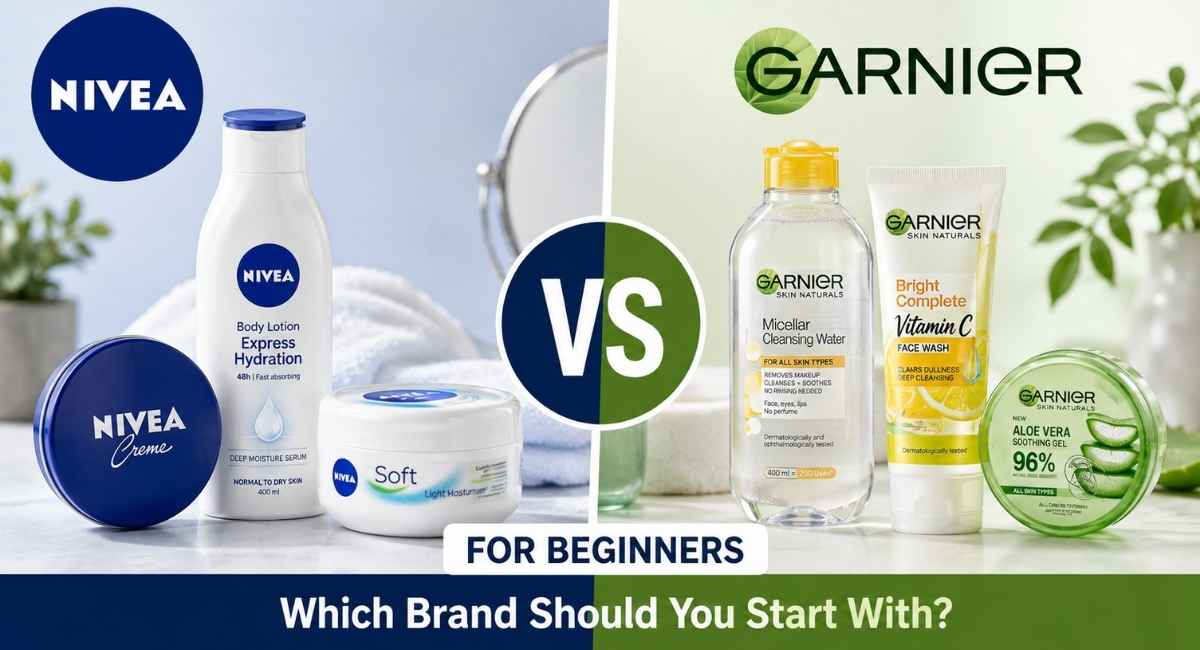
You’re standing in the skincare aisle, holding a Nivea tin in one hand and a Garnier bottle in the other, and suddenly building a routine feels harder than it should. Every ad promises glowing skin, but nobody tells you which brand actually fits a beginner’s skin and budget.
That’s the real question behind Nivea vs Garnier for beginners: not which brand wins overall, but which one matches what your skin needs right now. One leans on gentle hydration, the other on active ingredients built to fix specific concerns. Once you know the difference, the choice gets a lot easier.
Is Nivea a better starting brand compared to Garnier?
Standing in the skincare aisle with a blue tin of Nivea in one hand and a bottle of Garnier Micellar Water in the other is a moment almost every beginner goes through. Both brands are affordable, easy to find, and built for people who’ve never followed a skincare routine before, which is why Nivea vs Garnier for beginners comes up so often.
The short answer: Nivea suits dry, sensitive, or easily irritated skin, since its formulas focus on gentle hydration. Garnier works better if your skin runs oily, looks dull, or breaks out occasionally, because it leans on active ingredients built for those concerns.
Neither brand gets this wrong, they’re just built on different assumptions. Nivea assumes your skin mainly needs comfort and moisture. Garnier assumes you already have something specific to fix. The rest of this guide helps you figure out which one actually matches your skin.
Is Nivea a better starting brand compared to Garnier?
Standing in the skincare aisle with a blue tin of Nivea in one hand and a bottle of Garnier Micellar Water in the other is a pretty universal beginner moment. Both brands are cheap, easy to find, and clearly aimed at people who have never followed a skincare routine before, which is exactly why Nivea vs Garnier for beginners is such a common question.
The short version: Nivea usually works better if your skin is dry or sensitive, since its formulas focus on gentle hydration. Garnier tends to suit oily, dull, or breakout-prone skin better, because it leans on active ingredients built to target those specific concerns.
Understanding Skincare as a Beginner
Most people don’t fail at skincare because they picked the wrong brand. They fail because they start with too much, too fast. A retinol here, a vitamin C serum there, three different cleansers because none of them felt “right” yet.
A beginner skincare routine doesn’t need to solve every skin concern on day one. It needs to do three things reliably: clean your skin, keep it hydrated, and protect it from sun damage. Everything else can wait until you actually understand how your skin responds.
Basic Beginner Skincare Routine
Before comparing brands, it helps to know what a basic routine actually looks like. It’s shorter than most people expect.
- Cleanser – removes dirt, oil, and sunscreen without stripping the skin
- Moisturizer – restores hydration and supports the skin barrier
- Sunscreen – protects against UV damage, arguably the most skipped step
That’s the entire foundation. Serums, exfoliants, and treatment products come later, once your skin has adjusted to a consistent routine.
Why Nivea and Garnier Are Popular Among Beginners
Nivea and Garnier show up in almost every beginner skincare conversation for a simple reason: they remove the guesswork around price and access. You can find either one at a regular pharmacy or supermarket, usually for less than the cost of a fast food meal.
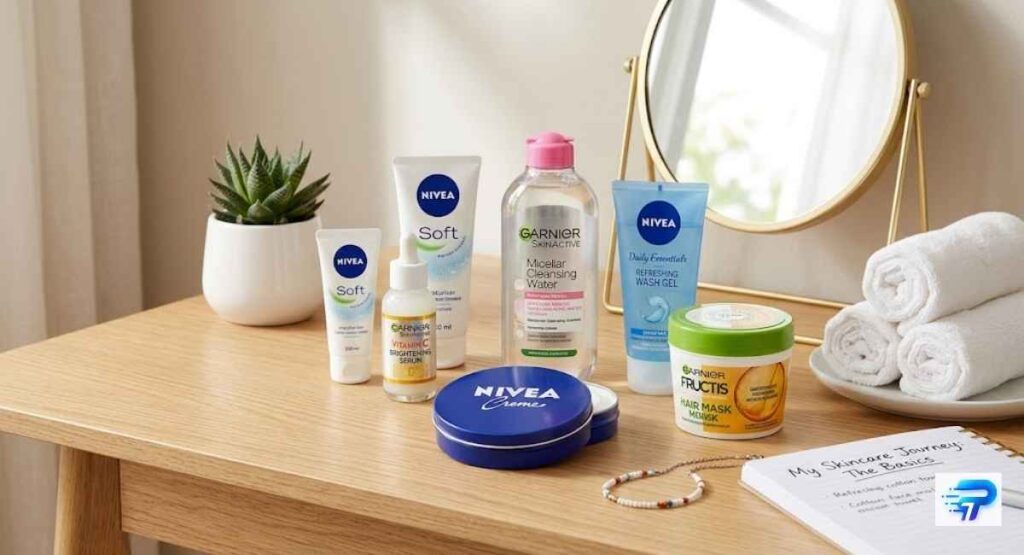
They’re also forgiving. Neither brand requires you to understand ingredient percentages or complicated layering rules before you can use their products safely. That combination of affordable skincare and low commitment is rare, and it’s why so many first routines start with one of these two brands.
What Is Nivea Known For?
Nivea is a German brand, made by Beiersdorf, best known for one thing above all else: moisture. The classic blue tin of Nivea Creme has been around since 1911, and that history still shapes how the brand thinks about facial skincare today.
Rather than chasing new trends, Nivea sticks to a formula that works: rich textures, minimal fuss, and a focus on comfort over correction. It’s less about fixing a specific skin concern and more about giving your skin what it needs to feel calm and hydrated every day.
Nivea Ingredient Philosophy
Nivea’s formulas center on ingredients that support the skin barrier rather than actives that treat specific problems. Glycerin and panthenol show up across most of the lineup, both known for drawing in and holding onto moisture.
This is a protect-first approach. Instead of asking your skin to change, Nivea’s ingredient philosophy is built around keeping it comfortable, which is exactly why it’s often recommended as a first skincare brand for people with dry or reactive skin.
Popular Nivea Products
Nivea’s product range is intentionally simple, and a handful of items make up most of what beginners actually buy.
| Product | Best For |
|---|---|
| Nivea Creme | All-purpose moisturizer, dry or rough skin |
| Nivea Soft | Lighter daily moisturizer |
| Nivea Q10 | Anti-aging, mature or mature-adjacent skin |
| Nivea Men | Simplified routine for men’s skincare |
| Nivea Sun | Everyday sun protection |
None of these require prior skincare knowledge. That’s the point.
What Is Garnier Known For?
Garnier takes a different route. Owned by L’Oréal, its skincare identity is built around the SkinActive line, which brings ingredients like vitamin C, niacinamide, and salicylic acid into affordable, drugstore-friendly products.
Its most recognizable product, Garnier Micellar Water, built a reputation as a fast, no-rinse way to remove makeup and daily grime. That single product shaped how a lot of people think of the brand: lighter, more targeted, and slightly more willing to ask your skin to do something rather than just sit there and absorb moisture.
Garnier Ingredient Philosophy
Garnier’s formulas center on active ingredients meant to address a specific concern rather than just hydrate. Vitamin C shows up for dullness, salicylic acid for oil and breakouts, niacinamide for uneven tone, all in concentrations mild enough for drugstore skincare.
This is a treat-first approach. Instead of just supporting the skin barrier, Garnier’s ingredient philosophy assumes you already know what you want to fix, which makes it a stronger pick for beginners who have a clear skin concern in mind.
Popular Garnier Products
Garnier’s lineup is wider than Nivea’s, split mostly across its SkinActive line.
| Product | Best For |
|---|---|
| Garnier Micellar Water | Quick, no-rinse cleansing |
| Garnier Vitamin C Serum | Dullness, uneven skin tone |
| Garnier SkinActive Moisturizer | Lightweight daily hydration |
| Garnier Salicylic Acid Cleanser | Oily or acne-prone skin |
| Garnier Sheet Masks | Low-commitment way to try new ingredients |
Most beginners start with the Micellar Water, since it doubles as a first step in both cleansing and makeup removal.
Nivea vs Garnier for Beginners: Quick Comparison Table
Before going category by category, here’s the fast version of how these two brands stack up.
| Category | Nivea | Garnier |
|---|---|---|
| Core focus | Hydration and barrier support | Targeted active ingredients |
| Texture | Rich, cream-based | Lighter, gel or water-based |
| Best skin type | Dry, sensitive | Oily, combination, acne-prone |
| Learning curve | Low | Slightly higher |
| Signature product | Nivea Creme | Micellar Water |
Neither column is objectively “better.” It just depends on what your skin actually needs.
Simplicity for Beginners
Simplicity matters more than most beginners realize. A routine you understand is a routine you’ll actually stick with.
This is where Nivea and Garnier start to differ the most, not in quality, but in how much thinking each one asks of you.
Nivea: Easy to Understand
Nivea’s small product range makes decision-making easy. Pick a moisturizer, pick a cleanser, and you’re set, with very little risk of grabbing something too strong for your skin.
There’s no need to learn ingredient percentages or research active ingredients before your first purchase. That alone removes a lot of the anxiety beginners feel in the skincare aisle.
Garnier: More Variety
Garnier’s range is bigger, and that variety can be exciting or overwhelming depending on how you look at it. Cleansers, serums, micellar waters, and masks all sit under one brand name.
For someone who already knows their skin concern, this variety is useful. For a total beginner with no idea what “niacinamide” does, it can feel like one more thing to research before buying anything.
Winner for Simplicity
Nivea wins here. Fewer choices mean fewer chances to pick the wrong product.
Moisturizing Power
Moisturizer is arguably the most important product in any beginner skincare routine, since it’s the one step almost every skin type needs daily.
Nivea and Garnier approach hydration in noticeably different ways, and that difference shows up the moment you apply either one.
Nivea’s Strength
Nivea built its reputation on moisture. Ingredients like glycerin and panthenol help the skin hold onto water, which is why the brand’s creams feel so rich on dry or flaky skin.
This heavier approach works well in cold weather or for skin that feels tight after cleansing. It’s less suited to skin that already produces enough oil on its own.
Garnier’s Approach
Garnier’s moisturizers lean lighter, often gel-based rather than cream-based. They absorb faster and don’t leave the greasy finish that heavier creams can.
This makes Garnier a more comfortable daily moisturizer for people whose skin already feels oily by midday.
Moisturizing Comparison
| Factor | Nivea | Garnier |
|---|---|---|
| Texture | Thick, cream-based | Light, gel-based |
| Absorption speed | Slower | Faster |
| Best season fit | Winter, dry climates | Humid or warm climates |
| Best for | Dry, dehydrated skin | Oily, combination skin |
Winner for Dry Skin
Nivea wins for dry skin. Its richer formulas simply hold more moisture where it’s needed most.
Which Brand Is Better for Acne?
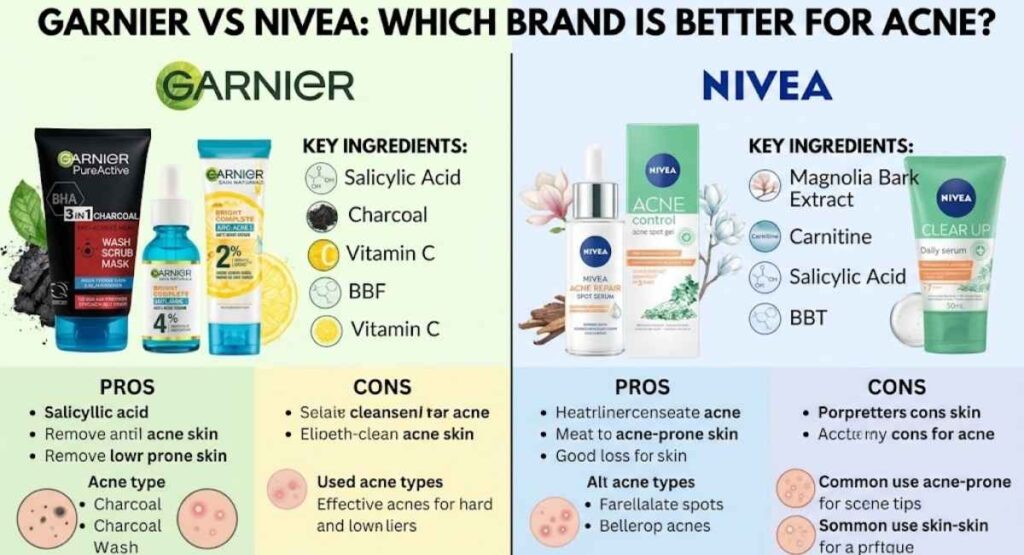
Acne is one of the most common reasons beginners start researching skincare in the first place, and it’s also where these two brands diverge the most.
Nivea and Garnier take almost opposite approaches to breakouts, so the right pick here depends heavily on how your skin already behaves.
Garnier for Acne-Prone Skin
Garnier’s use of salicylic acid and oil-control ingredients gives it a real advantage for acne-prone skin. These ingredients work by clearing clogged pores and reducing excess oil, which are two of the main drivers behind breakouts.
Results usually take a few weeks of consistent use, and skin sometimes looks slightly worse before it improves as congestion works its way to the surface.
Nivea for Sensitive Acne-Prone Skin
Nivea isn’t built for treating acne directly, but that can actually help for skin that reacts badly to active ingredients. Its gentler, fragrance-light formulas reduce the risk of irritation while the skin barrier heals.
This matters because a damaged skin barrier can make acne worse, not better. Sometimes calming the skin down is the more useful first step.
Winner for Acne Care
Garnier wins for direct acne treatment. Nivea wins if irritation, not oil, is the bigger problem.
Sensitive Skin Comparison
Sensitive skin changes the entire calculation, since the goal shifts from results to simply avoiding a reaction.
Both brands claim to work for sensitive skin, but “sensitive skin friendly” means something different depending on which one you’re using.
Why Nivea Performs Well
Nivea’s simpler formulas, built mostly around glycerin and panthenol, carry a lower risk of triggering irritation. There are fewer active ingredients overall for reactive skin to respond badly to.
This doesn’t mean every Nivea product is fragrance-free, so checking the label still matters even within a generally gentler lineup.
Garnier Can Be Stronger
Garnier’s active ingredients, especially salicylic acid and vitamin C, can sting or cause dryness on sensitive skin if introduced too quickly. Some formulas also include fragrance, which adds another possible trigger.
This doesn’t rule Garnier out for sensitive skin. It just means products need to be introduced slowly and watched closely.
Sensitive Skin Comparison
| Factor | Nivea | Garnier |
|---|---|---|
| Irritation risk | Lower | Moderate |
| Fragrance presence | Varies by product | Varies by product |
| Active ingredient load | Minimal | Higher |
| Introduction pace | Can use daily fairly quickly | Best introduced gradually |
Winner for Sensitive Skin
Nivea wins for sensitive skin, mainly because there’s less room for an active ingredient to cause a reaction.
Product Texture and Feel
Texture might seem like a small detail, but it’s often the difference between a product you actually use daily and one that sits half-empty in a drawer. How something feels on your skin affects whether you’ll stick with it.
Nivea and Garnier sit at opposite ends of the texture spectrum, and that difference is obvious from the first application.
Nivea Texture
Nivea’s creams are thick, rich, and slow to sink in. That heaviness is exactly what makes them effective for dry or flaky skin, since the product sits on the surface longer and locks in moisture.
On oily skin, though, that same richness can feel like too much, especially in warm weather or humid climates.
Garnier Texture
Garnier’s formulas tend to be lighter, often gel or water-based, and absorb within seconds of application. There’s little to no greasy residue left behind.
This lightweight feel makes Garnier easier to layer under makeup or sunscreen without that heavy, occluded feeling some creams leave behind.
Winner for Lightweight Feel
Garnier wins here. Its formulas are built to disappear into the skin quickly, which suits oily and combination skin types best.
Ingredient Philosophy
Every skincare brand is built around an underlying idea of what skin actually needs. Nivea and Garnier answer that question in almost opposite ways, and understanding that difference explains most of what separates the two brands.
This isn’t about one philosophy being smarter than the other. It’s about which one matches what your skin is currently asking for.
Nivea Focuses On
Nivea’s formulas are built around protection and comfort. Glycerin, panthenol, and light oils appear across most of the lineup, all working to reinforce the skin barrier rather than change the skin’s condition.
The goal isn’t to fix anything specific. It’s to keep skin hydrated and calm enough that problems don’t develop in the first place.
Garnier Focuses On
Garnier’s formulas are built around results. Vitamin C, salicylic acid, and niacinamide show up repeatedly, each chosen to address a visible concern like dullness, oil, or uneven tone.
This approach assumes the skin already has something worth correcting, which is why Garnier tends to appeal to people who already know what they’re trying to fix.
Ingredient Focus Comparison
| Approach | Nivea | Garnier |
|---|---|---|
| Core goal | Protect and hydrate | Treat and correct |
| Common ingredients | Glycerin, panthenol | Vitamin C, salicylic acid, niacinamide |
| Best suited for | Preventive, everyday care | Targeted concerns |
| Irritation potential | Low | Moderate, depending on product |
Which Brand Is Better for Your Skin Type?
At this point, the pattern should already be clear. Skin type, more than brand loyalty, decides which of these two will actually work for you.
Instead of repeating the same comparison, here’s the direct answer by skin type.
Best Choice by Skin Type
| Skin Type | Better Choice | Why |
|---|---|---|
| Dry skin | Nivea | Richer formulas hold more moisture |
| Oily skin | Garnier | Lightweight, non-greasy textures |
| Combination skin | Either, depending on area | Mix and match may work best |
| Sensitive skin | Nivea | Fewer active ingredients, lower irritation risk |
| Acne-prone skin | Garnier | Salicylic acid targets breakouts directly |
Can You Use Nivea and Garnier Together?
There’s no rule saying a routine has to come from a single brand. In fact, mixing Nivea and Garnier is one of the more practical ways to get the benefits of both.
A common combination is a Garnier cleanser to manage oil and daily grime, paired with a Nivea moisturizer to restore hydration afterward. Neither product needs to “match” the other for this to work well.
Example Routine
- Cleanse: Garnier Micellar Water or salicylic acid cleanser
- Treat (optional): Garnier Vitamin C serum for dullness
- Moisturize: Nivea Creme or Nivea Soft for hydration
- Protect: Sunscreen from either brand, applied daily
Purging vs. Breaking Out: How to Tell the Difference?
This confuses more beginners than almost anything else in skincare. When you introduce an active ingredient like salicylic acid or vitamin C, your skin can look worse for a couple of weeks before it improves. That’s called purging, and it happens because the ingredient speeds up cell turnover, pushing existing congestion to the surface faster than usual.
A genuine bad reaction looks different and usually shows up as redness, itching, or breakouts in areas you don’t normally struggle with.
| Sign | Purging | Breaking Out |
|---|---|---|
| Timing | First 2 to 4 weeks of a new active | Can happen anytime |
| Location | Areas you already break out | New, unusual areas |
| Accompanying symptoms | Mild, no itching | Redness, itching, burning |
| What to do | Continue if mild | Stop the product |
Patch Testing: What Beginners Should Do Before Using a New Product
Patch testing is one of the simplest habits a beginner can build, and it takes less than five minutes. Apply a small amount of the new product to an inconspicuous area, like behind the ear or along the jawline, and wait 24 to 48 hours before using it on your full face.
If the skin stays calm during that window, it’s reasonably safe to introduce into your routine. If you notice redness, burning, or itching, that product isn’t right for your skin, regardless of how well it works for someone else.
Common Skincare Mistakes Beginners Make
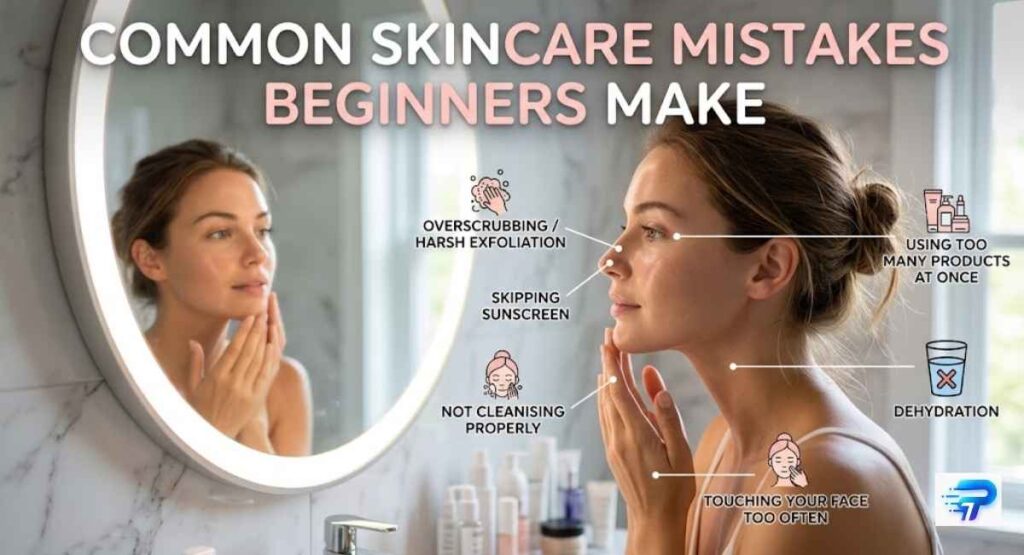
Choosing between Nivea and Garnier is only half the equation. Plenty of beginners pick a perfectly good product and still end up frustrated, usually because of how they use it rather than what they bought.
The next few habits are the ones that trip people up most often, and all three are easy to fix once you notice them.
Buying Too Many Products
It’s tempting to buy a cleanser, serum, moisturizer, and treatment product all in the same week, especially after seeing a routine online. The problem is that skin needs time to adjust, and introducing several new products at once makes it impossible to tell what’s actually helping or causing irritation.
A slower approach, adding one product at a time, gets you to a working routine faster in the long run, even though it feels slower at first.
Expecting Instant Results
Skincare works on a longer timeline than most marketing suggests. Moisturizers can improve comfort within days, but ingredients like vitamin C or salicylic acid typically need four to eight weeks of consistent use before changes are visible.
Switching products every week because “nothing’s happening yet” usually resets that clock, which is why consistency matters more than constantly trying something new.
Skipping Sunscreen
Sunscreen is the step beginners skip most often, usually because its benefits aren’t immediately visible the way a moisturizer’s are. Without it, dark spots take longer to fade, fine lines develop faster, and any progress from other products gets undermined by daily UV exposure.
Both Nivea and Garnier offer sunscreen options, so there’s no need to look elsewhere just to complete this step.
Recommended Beginner Routine With Nivea
Nivea’s routine is about as simple as skincare gets, which is exactly why it works for people just starting out. There’s no serum to squeeze in or timing rule to remember, just three steps done consistently.
This setup works best for dry, sensitive, or easily irritated skin.
Morning
- Gentle cleanser
- Nivea Soft or Nivea Creme
- Sunscreen, SPF 30 or higher
Evening
- Cleanser to remove the day’s buildup
- Nivea Creme on dry or rough areas
Recommended Beginner Routine With Garnier
Garnier’s routine follows the same three-step foundation, just built around lighter, faster-absorbing products. It suits oily or combination skin better than Nivea’s heavier creams.
Anyone dealing with dullness or occasional breakouts can layer in a targeted product once the basics feel comfortable.
Morning
- Garnier Micellar Water or gentle cleanser
- Lightweight Garnier moisturizer
- Sunscreen, SPF 30 or higher
Evening
- Garnier Micellar Water to remove makeup and sunscreen
- Face wash if needed
- Moisturizer
Week 1 to Month 2: How to Build Your Routine Gradually
Rushing a routine is the fastest way to undo it. Skin needs time to adjust to new products, and adding things too quickly makes it hard to tell what’s actually working.
| Timeframe | What to Do |
|---|---|
| Week 1 to 2 | Cleanser, moisturizer, sunscreen only |
| Week 3 to 4 | Continue the basics if skin feels comfortable |
| Month 2 | Introduce one targeted product, like vitamin C or salicylic acid |
| After Month 2 | Adjust based on how skin responds, add a second active if needed |
This pace feels slow at first, but it’s what actually prevents the irritation that sends most beginners back to square one.
Price and Value Comparison: What’s the Actual Cost Per Use?
Sticker price alone doesn’t tell the full story. A Nivea Creme tin costs more upfront in some sizes, but its thick texture means a little goes a long way, stretching the product over more uses.
Garnier’s lighter formulas apply just as thinly, so the cost per use ends up fairly close between the two brands. Neither one requires a big budget to maintain a basic routine.
| Product Type | Approx. Price Range | Typical Uses Per Bottle |
|---|---|---|
| Nivea Creme | Budget to mid-range | High, due to concentrated texture |
| Nivea Soft | Budget | High |
| Garnier Micellar Water | Budget | Moderate, used daily for cleansing |
| Garnier Vitamin C Serum | Mid-range | Moderate |
If You Want a Dermatologist-Grade Default Instead
Nivea and Garnier are solid, affordable choices, but they’re not the brands most dermatologists reach for first. That distinction usually goes to CeraVe or Cetaphil, both developed with dermatologist input and built around barrier-supporting ingredients like ceramides.
That doesn’t make Nivea or Garnier a lesser option. It just means they fall into a different category: affordable drugstore staples rather than clinically formulated basics. Either path can lead to healthy skin when used consistently.
Final Comparison Table
| Category | Nivea | Garnier |
|---|---|---|
| Best for | Dry, sensitive skin | Oily, acne-prone skin |
| Texture | Rich, cream-based | Light, gel-based |
| Ingredient focus | Hydration and barrier support | Active, targeted ingredients |
| Simplicity | Very high | Moderate |
| Irritation risk | Low | Moderate |
| Price range | Budget to mid-range | Budget to mid-range |
| Signature product | Nivea Creme | Micellar Water |
FAQs
Is Nivea good for acne-prone skin?
Not as a primary treatment. Nivea’s richer formulas can feel heavy on acne-prone skin, so a lighter, non-comedogenic option usually works better for that specific concern.
Is Garnier too strong for a first routine?
Only if too many active products are introduced at once. Garnier’s basic cleansers are fine from day one, while treatment products with salicylic acid or vitamin C should be added slowly.
Can I use Nivea and Garnier together?
Yes. A common combination is a Garnier cleanser paired with a Nivea moisturizer, and there’s no rule requiring one brand for an entire routine.
How do I know if I’m purging or breaking out?
Purging shows up in areas you already break out and fades within a few weeks. A true reaction often appears in new areas and comes with redness or itching, which is a sign to stop the product.
Do I need sunscreen if my moisturizer already has SPF?
Usually yes. Most people don’t apply enough moisturizer to get full SPF protection from it alone, so a separate sunscreen is the more reliable option.
Should I start with CeraVe or Cetaphil instead?
They’re worth considering, especially if you want dermatologist-developed formulas from the start. Nivea and Garnier remain reasonable choices too, just in a more affordable, mainstream category.
Is Nivea or Garnier better for teenage skin?
It depends on the main concern. Teens dealing with oil or breakouts often do better with Garnier, while those with dry or sensitive skin may prefer Nivea’s gentler approach.
How long before I see results from either brand?
Moisturizers can improve comfort within days. Active ingredients like vitamin C or salicylic acid typically take four to eight weeks of consistent use before visible changes appear.
What’s the actual cheapest way to start a routine with either brand?
A basic three-step routine, cleanser, moisturizer, and sunscreen, from either brand keeps costs low. Adding serums or treatment products can wait until the basics are working well.
Bottom Line
Nivea and Garnier solve different problems. Nivea keeps things simple and hydrating, which makes it the safer starting point for dry or sensitive skin. Garnier gives you tools to target specific concerns like oiliness or dullness, which suits beginners who already know what they’re dealing with.
Neither brand is the universal right answer, and neither needs to be used alone. What actually matters is starting with the basics, introducing new products slowly, and paying attention to how your own skin responds along the way.

Daniel Carter is a digital content writer and researcher at PrimeTechUpdate, specializing in technology, AI, software, business, travel, and digital trends. He focuses on creating accurate, practical, and easy-to-understand content that helps readers make informed decisions. His work emphasizes clarity, reliability, and a reader-first approach.