

You’ve narrowed your first skincare routine down to two names everyone keeps mentioning: Nivea and Garnier. Both sit on the same drugstore shelf, cost roughly the same, and promise healthier skin, so the choice feels harder than it should be.
Here’s the short answer: is Nivea a good starting brand compared to Garnier? Yes, if your priority is hydration and a fuss-free routine. Garnier pulls ahead if you’re dealing with oil, breakouts, or dullness and want ingredients that actively work on those issues. Neither brand is wrong to start with — they’re just solving different problems.
Nivea vs Garnier: Quick Comparison
Before going deeper, here’s how the two brands stack up at a glance.
| Category | Nivea | Garnier |
|---|---|---|
| Core focus | Hydration and skin barrier support | Targeted treatment (oil, spots, tone) |
| Texture | Rich, creamy | Lightweight, fast-absorbing |
| Best skin type | Dry, sensitive | Oily, combination, acne-prone |
| Key ingredients | Glycerin, panthenol, vitamin E | Vitamin C, salicylic acid, hyaluronic acid |
| Beginner learning curve | Very low | Slightly higher |
| Price range | Budget-friendly | Budget-friendly |
| Parent company | Beiersdorf | L’Oréal |
If you read nothing else on this page: dry or reactive skin usually does better starting with Nivea, while oily or blemish-prone skin tends to see faster results with Garnier. The rest of this guide breaks down exactly why.
What Is Nivea?
Nivea is a German skincare brand owned by Beiersdorf, and it has been around since 1911. It built its name on the iconic blue tin moisturizing cream, and that hydration-first philosophy still shapes almost everything the brand makes.
The product range covers face creams, body lotions, cleansers, and sunscreens. Most formulas lean simple: fewer active ingredients, more emollients and moisture-locking agents.
This makes Nivea easy to understand as a beginner. You’re not decoding a long list of actives, you’re mainly choosing a texture that suits your skin.
What Nivea is known for:
- Rich, creamy moisturizers
- Skin barrier support
- Minimal, fragrance-light formulas
- Wide availability at low prices
What Is Garnier?
Garnier is a French brand under L’Oréal, and it takes a more ingredient-driven approach to skincare. Instead of leading with texture, Garnier leads with what a product is meant to fix.
You’ll see product lines built around specific concerns: brightening, oil control, acne marks, uneven tone. Ingredients like vitamin C, niacinamide, and salicylic acid show up often across the range.
This gives Garnier an edge for beginners who already know what skin issue they want to address, rather than just wanting general hydration.
What Garnier is known for:
- Micellar waters and cleansing products
- Vitamin C and niacinamide serums
- Lightweight, fast-absorbing textures
- Products aimed at visible skin concerns
Nivea vs Garnier: Key Differences
The core difference comes down to intent. Nivea is built around maintenance: keep skin hydrated, comfortable, and protected. Garnier is built around correction: treat a specific issue you can point to.
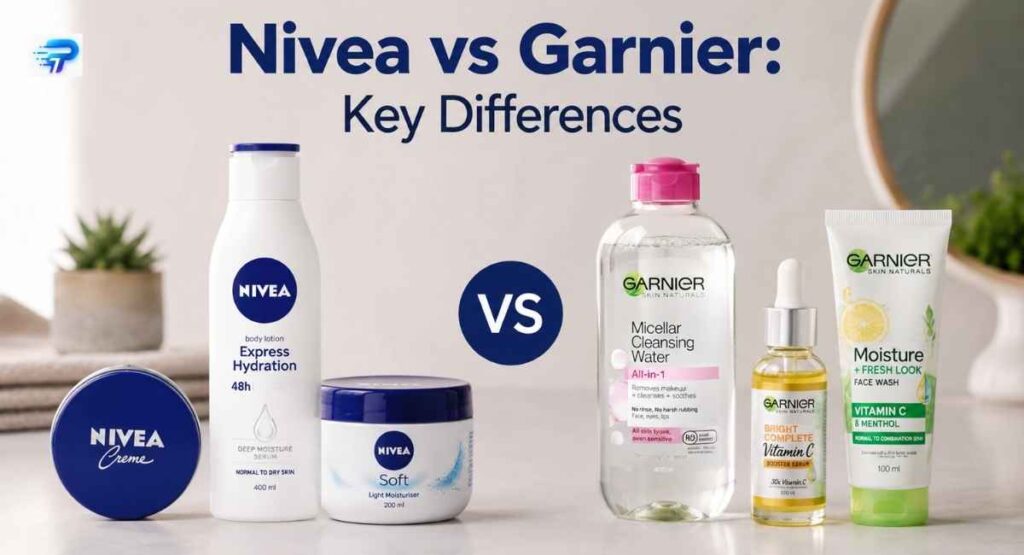
Neither approach is more advanced than the other. A beginner with dry skin doesn’t need correction, and a beginner with oily, breakout-prone skin usually needs more than hydration alone.
| Factor | Nivea | Garnier |
|---|---|---|
| Philosophy | Hydrate and protect | Target and treat |
| Ingredient complexity | Low | Moderate |
| Texture feel | Heavier, creamy | Lighter, quick-absorbing |
| Ideal starting point | General skincare beginners | Beginners with a known concern |
Choose Nivea if you want:
- A simple routine with minimal decision-making
- Rich hydration for dry or tight skin
- Gentle formulas with low irritation risk
- A brand you can use without researching ingredients
Choose Garnier if you want:
- Products aimed at oil control or acne marks
- Active ingredients like vitamin C or salicylic acid
- Lightweight textures that don’t feel heavy
- Faster visible change in tone or texture
Nivea vs Garnier for Dry Skin
Dry skin needs ingredients that hold moisture in, and that’s exactly where Nivea’s formulas are built to perform. The heavier, cream-based textures sit on the skin longer and slow down water loss through the day.
Garnier isn’t a poor option here, but its lighter, fast-absorbing formulas are designed with oil control in mind. That’s the opposite of what parched, flaky skin actually needs.
Winner: Nivea
Nivea’s glycerin and panthenol-based creams give dry skin the sustained hydration it’s missing. For beginners dealing with tightness, flaking, or rough patches, it’s the more forgiving place to start.
Nivea vs Garnier for Oily Skin
Oily skin has the opposite problem: too much sebum, shine by midday, and a higher chance of clogged pores. Heavy, rich creams can make this worse rather than better.
Garnier’s lightweight formulas absorb quickly and won’t add extra oil on top of what the skin already produces. Several of its products are also formulated to help manage shine and pore congestion.
Winner: Garnier
If your face feels shiny within a few hours of washing it, Garnier’s oil-control and lightweight moisturizing options are the more practical fit than Nivea’s richer creams.
Nivea vs Garnier for Sensitive Skin
Sensitive skin reacts fastest to fragrance and active ingredients, so the safest products are usually the simplest ones. Nivea’s formulas generally have fewer actives and a lighter fragrance load, which lowers the chances of a reaction.
Garnier can still work for sensitive skin, especially its fragrance-free or micellar water range, but its treatment products contain actives that need more caution.
Slight Edge: Nivea
Nivea isn’t automatically irritation-free, no product is, but its simpler formulas make it a slightly safer default for beginners who don’t yet know how their skin reacts. Always patch test before applying anything new to your full face.
Nivea vs Garnier for Acne-Prone Skin
Acne needs ingredients that actually work on breakouts: oil control, pore-clearing actives, and non-comedogenic formulas. This is where Garnier’s product line is built with more intention.
Salicylic acid, one of Garnier’s more common actives, helps clear clogged pores and reduce new breakouts with regular use. Nivea’s core range doesn’t focus on this at all.
Winner: Garnier
For acne-prone skin, Garnier’s targeted formulas give beginners a real starting point for treatment, not just maintenance. Introduce active ingredients gradually rather than all at once to avoid irritation.
Nivea vs Garnier: Which Brand Is Easier for Beginners?
Ease of use isn’t just about the product, it’s about how much thinking the routine demands. Nivea keeps that thinking to a minimum.
Pick a cleanser, pick a moisturizer, add sunscreen. There’s no need to learn what niacinamide does or worry about layering order.
Garnier asks a little more from a beginner: knowing your skin concern, understanding what each active ingredient does, and introducing them at the right pace.
Winner: Nivea
If you want to start a routine today without researching ingredients first, Nivea removes that barrier. Garnier rewards a bit more effort but isn’t difficult once you understand the basics.
What Should a Beginner Look for in Nivea or Garnier Ingredients?
The ingredient list matters more than the brand name. Here’s what to check for, no matter which product you pick:
- Fragrance-free formulas if your skin is sensitive or reactive
- Non-comedogenic labeling if you’re prone to clogged pores or acne
- Glycerin or hyaluronic acid near the top of the list for hydration
- Salicylic acid or vitamin C only if you’re specifically targeting acne or dullness
- Mineral oil, petrolatum, or dimethicone as sealants, useful for dry skin, heavier for oily skin
A quick way to think about it: hydrating ingredients solve dryness, active ingredients solve specific concerns, and the fewer actives you use at once, the lower your risk of irritation.
Don’t judge a product purely by brand reputation. A Nivea product with added actives can behave more like a Garnier treatment product, and vice versa. Always check the actual formula.
How to Build a Simple Beginner Skincare Routine With Nivea or Garnier?
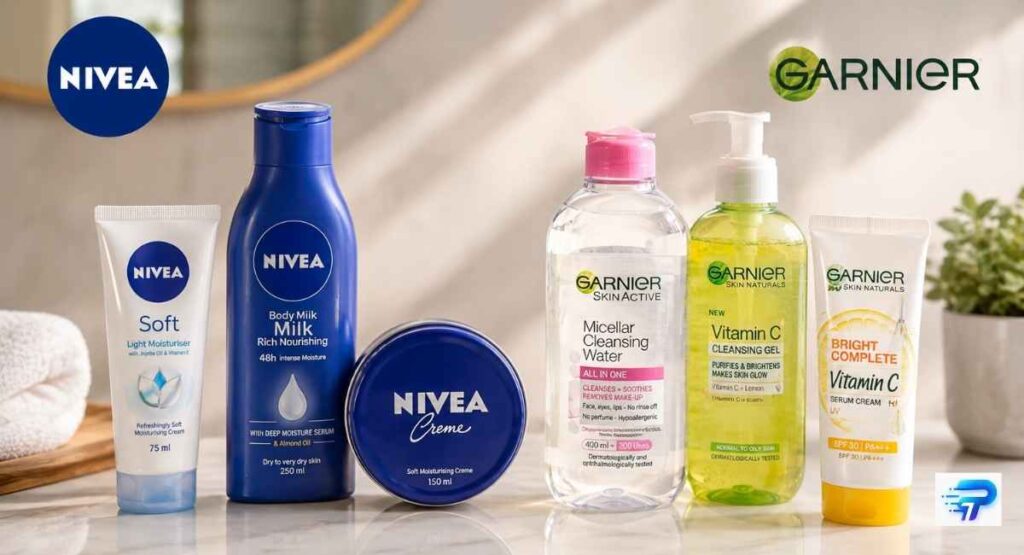
You don’t need more than three steps to start. Cleanser, moisturizer, sunscreen covers almost everything a beginner routine needs.
Morning routine:
- Gentle cleanser (or fragrance-free micellar water to remove overnight buildup)
- Moisturizer suited to your skin type
- Broad-spectrum SPF 30 or higher
Evening routine:
- Cleanser to remove makeup, sunscreen, and daily dirt
- Moisturizer to restore hydration overnight
For dry or sensitive skin, lean on Nivea’s richer creams for both steps. For oily or acne-prone skin, use Garnier’s lighter moisturizer and consider its micellar water as your evening cleanser.
Once this routine feels comfortable, usually after a few weeks, you can introduce one active ingredient at a time. Never add more than one new product in the same week, so if irritation shows up, you know exactly what caused it.
Nivea vs Garnier: Price Comparison
Both brands sit firmly in the drugstore price bracket, so cost isn’t a major deciding factor between them. You can build a full routine with either brand for roughly the same monthly spend.
| Product Type | Nivea (approx.) | Garnier (approx.) |
|---|---|---|
| Cleanser | $5-8 | $6-9 |
| Moisturizer | $6-12 | $7-14 |
| Micellar water | Limited range | $6-10 |
| Serum/treatment | Limited range | $10-16 |
| Sunscreen | $7-10 | $8-12 |
Garnier’s prices run slightly higher on treatment products like serums, mainly because of the added active ingredients. Nivea stays consistently affordable since most of its range is moisturizer-based rather than treatment-based.
Nivea vs Garnier: Pros and Cons
Nivea Pros
- Rich, effective hydration for dry skin
- Simple formulas, low learning curve
- Fragrance-light options for sensitive skin
- Very affordable and widely available
Nivea Cons
- Limited treatment options for acne or pigmentation
- Heavier textures can feel too rich for oily skin
- Fewer active ingredients for visible concerns
Garnier Pros
- Lightweight formulas suited to oily and combination skin
- Strong ingredient lineup (vitamin C, salicylic acid, niacinamide)
- Effective for acne marks, dullness, and uneven tone
- Micellar water doubles as a gentle makeup remover
Garnier Cons
- Active ingredients need gradual introduction
- Slightly steeper learning curve for true beginners
- Some products may irritate very sensitive skin
Nivea vs Garnier: Which One Should You Choose?
Your skin type should decide this, not brand loyalty. If your skin feels tight, flaky, or easily irritated, Nivea’s hydration-first approach gives you a gentler entry point.
If your skin gets oily, breaks out, or shows dark spots and dullness, Garnier’s targeted ingredients will likely get you results faster than a purely hydrating routine would.
Quick self-check:
| Your skin does this | Better starting brand |
|---|---|
| Feels tight or flaky | Nivea |
| Gets shiny by midday | Garnier |
| Reacts easily to new products | Nivea |
| Has visible breakouts or dark spots | Garnier |
| Is fairly balanced, no major concerns | Either works |
Plenty of people also end up using both, Nivea for daily moisturizing and Garnier for a targeted treatment step, once they’ve figured out what their skin actually needs.
Final Verdict: Nivea vs Garnier
So, is Nivea a good starting brand compared to Garnier? For most true beginners, especially those with dry or sensitive skin, yes. It removes the guesswork and lets you build a routine without worrying about ingredient interactions.
Garnier is just as valid a starting point, but it suits beginners who already know they’re dealing with oil, acne, or dullness and want a brand built to treat those issues directly.
The real answer isn’t about which brand is objectively better. It’s about matching the brand’s approach to what your skin actually needs right now, and staying consistent with a simple routine long enough to see results.
Frequently Asked Questions
Is Nivea good for beginners with no skincare experience?
Yes. Nivea’s simple, hydration-focused formulas make it easy to start a routine without researching ingredients first.
Is Garnier good for beginner skincare?
Yes, especially for beginners who already know their skin concern, such as oiliness or acne marks, and want products built to address it.
Nivea or Garnier for beginners with dry skin?
Nivea. Its richer, cream-based moisturizers hold in more moisture and suit dry, flaky skin better than Garnier’s lighter formulas.
Nivea or Garnier for beginners with oily skin?
Garnier. Its lightweight, fast-absorbing textures won’t add extra oil, and several products help manage shine and clogged pores.
Can I use Nivea and Garnier products together?
Yes. Many people combine a Garnier cleanser or serum with a Nivea moisturizer, depending on what each step of their routine needs.
How long before I see results from a beginner routine?
Hydration improvements can show up within days. Concerns like acne marks or uneven tone usually need several weeks of consistent use.
What’s the most important product for a beginner to get right?
A broad-spectrum SPF 30 or higher. It protects your skin from damage and preserves whatever progress the rest of your routine makes.

Daniel Carter is a digital content writer and researcher at PrimeTechUpdate, specializing in technology, AI, software, business, travel, and digital trends. He focuses on creating accurate, practical, and easy-to-understand content that helps readers make informed decisions. His work emphasizes clarity, reliability, and a reader-first approach.