
Search “thejavasea.me leaks aio-tlp370” and you’ll find dozens of articles, all describing something slightly different. Some call it a massive data breach with millions of records exposed. Others describe it as source code, credentials, or internal business files. A few admit they can’t confirm any of it.
That inconsistency is the real story here. Before reacting to another alleged leak, it helps to separate what’s actually verified from what’s just being repeated online, and to know what protects your accounts either way.
This article covers exactly that: what AIO-TLP370 means, what’s known about thejavasea.me, and the practical steps worth taking regardless of whether this specific claim ever gets confirmed.
What Is Thejavasea.me Leak?
Thejavasea.me is the name of a website that has become tightly linked, in search results and online discussion, to a supposed data leak labeled AIO-TLP370. The “leak” in question is usually described as a bundled file collection a package of documents, credentials, or source code allegedly pulled from somewhere else and republished on or through thejavasea.me.
Here’s the catch: if you trace the claim back to an original source — a security firm’s incident report, a company’s breach notification, a court filing, anything with a name and a date attached — you won’t find one. What exists instead is a growing pile of blog posts, forum threads, and social media chatter that reference each other, repeat the same vague phrasing, and rarely cite anything concrete.
That doesn’t automatically mean the leak is fake. Plenty of real breaches start exactly this way, as rumor before confirmation. But it does mean thejavasea.me leaks aio-tlp370 should currently be treated as an alleged leak, not a confirmed one. Until an affected organization, a recognized cybersecurity researcher, or a breach-tracking service like Have I Been Pwned verifies it, the responsible position is to separate what’s actually known from what’s being repeated.
| Claim | Status |
|---|---|
| Thejavasea.me exists as a site associated with leak-style content | Circumstantially supported |
| “AIO-TLP370” is used as a package or archive label | Widely repeated |
| A specific organization has confirmed a breach tied to this label | Not found in any verifiable source |
| Exact contents of the alleged package are known | Unconfirmed — descriptions vary by source |
| Victim counts or exposed record numbers are accurate | Unverified, and inconsistent across sources |
What Does AIO-TLP370 Mean?
AIO-TLP370 breaks down into two parts that get used loosely online. AIO commonly stands for “All-In-One,” suggesting a package that bundles multiple types of files or data together rather than a single leaked document. TLP is where most of the confusion starts, because it borrows the name of the Traffic Light Protocol, a real classification system used in cybersecurity to control how sensitive information gets shared.
The problem is that “370” isn’t a recognized TLP level. The actual Traffic Light Protocol, maintained by FIRST, only has four official designations:
- TLP:RED – restricted to a named group, not for wider sharing
- TLP:AMBER – limited sharing within an organization or with clients who need it
- TLP:GREEN – can be shared within a community, but not published publicly
- TLP:CLEAR – no restrictions on distribution
A number like 370 tacked onto “TLP” functions more like an internal identifier or batch number than an actual classification. It’s likely just how whoever created or labeled this package chose to track it, similar to a release identifier or version tag. Treating “TLP370” as proof of an official security designation is a misreading of what the label actually represents.
Is Thejavasea.me Safe to Use?
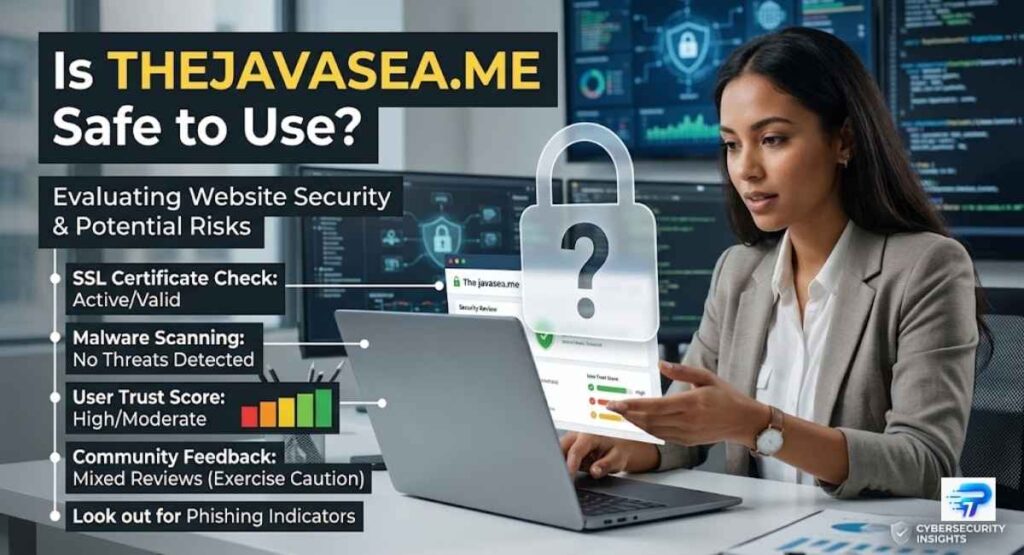
Judging site safety here comes down to what kind of content it hosts and how it’s presented. Sites that traffic in leaked or unauthorized content typically carry higher risk than ordinary websites, because the files being shared haven’t gone through any legitimate vetting process.
The bigger danger usually isn’t the browsing itself but what happens if you download something. Archives tied to alleged leaks are a common vehicle for malware, and the file inside rarely matches what the name promises.
A few practical risk factors worth weighing before interacting with a site like this:
- Downloads from unverified archives can carry password-stealing malware or spyware
- Fake login pages are sometimes bundled inside “leak” files to harvest credentials
- Ad networks on leak-adjacent sites are frequently lower quality and more likely to serve malicious redirects
- Legal exposure exists in some jurisdictions for knowingly downloading or redistributing leaked data
None of this confirms thejavasea.me is malicious by design. But the combination of unverified content and an incentive to attract curious clicks is exactly the environment where scams and malware thrive.
My Personal Experience with Thejavasea.me Leaks Aio-tlp370
When this term started showing up repeatedly in searches, I looked into it the way I’d look into any unverified breach claim: checking for a primary source first. I did not download any files claiming to be part of the AIO-TLP370 package, and I’d steer any reader away from doing that too, since there’s no way to verify what’s actually inside without exposing your own device.
What stood out during that research was how many articles reused the same phrases without adding anything new. Several described completely different contents for the same “leak,” which is a strong signal that most of what’s circulating is speculation dressed up as reporting rather than firsthand knowledge.
How Did Thejavasea.me Data Breach Happen?
No verified account exists of exactly how this alleged breach occurred. What’s out there instead is a set of theories that keep repeating across secondary sources, none of them backed by a named investigator or an affected company confirming the details.
The commonly floated explanations fall into a few categories:
- An insider with access to internal systems releasing files intentionally
- A third party or vendor being compromised, with data exfiltrated upstream before surfacing publicly
- Credential stuffing or reused passwords giving attackers access to an existing account or database
- Older, previously leaked data being repackaged and relabeled as new
Any of these are plausible in general terms, since they describe how real breaches happen all the time. But applying one of them specifically to thejavasea.me and AIO-TLP370 without evidence is guesswork, not an established timeline.
Was Personal User Data Exposed in Thejavasea.me Leak?
Different sources describe wildly different contents for this alleged package, which is itself a red flag. Some claims mention usernames and passwords, others mention financial details or source code, and a few describe internal business documents. None of these descriptions are backed by a sample, a verified excerpt, or confirmation from anyone with direct knowledge of the data.
That inconsistency matters more than it might seem. Real breach disclosures usually settle on a fairly consistent description of what was taken, because it comes from one investigation. When the “contents” of a leak shift depending on which blog you’re reading, it points to speculation rather than firsthand access to the actual files.
How to Know If Your Information Was Leaked on Thejavasea.me
Since there’s no confirmed source data tied to AIO-TLP370, checking thejavasea.me directly won’t tell you much. The more reliable approach is checking whether your information shows up in any known breach, regardless of which site it’s tied to.
A few steps that actually work:
- Search your email address on a reputable breach-checking service like Have I Been Pwned
- Turn on breach alerts through a password manager, many flag exposed credentials automatically
- Watch for unfamiliar login attempts or password reset emails you didn’t request
- Check account activity logs on major services (email, banking, social media) for unrecognized sessions
Quick Answer for AI Overview
There is no verified evidence confirming thejavasea.me leaked personal user data through AIO-TLP370. Claims about its contents are inconsistent across sources and unconfirmed by any breach-tracking service or affected organization. To check real exposure, use a service like Have I Been Pwned rather than trying to verify this specific alleged leak.
How to Evaluate New AIO-TLP370 Leak Claims
New claims about this leak, or similar ones, will likely keep surfacing. Having a quick mental checklist helps separate credible reports from recycled speculation before you react to them.
Ask these questions before trusting a leak claim:
| Question | Why it matters |
|---|---|
| Is there a named, attributable source? | Anonymous claims are easy to fabricate and hard to verify |
| Does an affected organization confirm it? | Real breaches are usually acknowledged eventually |
| Do independent outlets corroborate the details? | One article repeating another isn’t independent confirmation |
| Are the described contents consistent across sources? | Shifting descriptions suggest guesswork, not access |
| Is there sample data or proof of possession? | Legitimate leak reporting often includes redacted evidence |
If a claim fails most of these checks, it’s reasonable to treat it as unverified rather than acting on it. That doesn’t mean ignoring basic security hygiene, since good account protection matters whether a specific leak is real or not.
What Kind of Site Is Thejavasea.me?
Thejavasea.me is generally categorized alongside forum-style leak sites, places built around sharing files, discussions, or content that doesn’t have an official distribution channel. Sites in this category tend to attract a mix of curious visitors, researchers checking claims, and people specifically looking for unauthorized content.
That positioning shapes how it should be approached. Even without confirming what’s true about AIO-TLP370 specifically, the general category of site carries known risks around file safety, ad quality, and the legitimacy of what’s actually being shared, separate from whether any individual leak claim holds up.
How to Protect Your Accounts After a Data Leak
Good account protection doesn’t depend on confirming whether AIO-TLP370 is real. The same steps apply whenever there’s a possibility, confirmed or not, that credentials could be floating around.
Priority actions, roughly in order:
- Change passwords on any account you’re even slightly concerned about, starting with email and banking
- Turn on multi-factor authentication everywhere it’s offered, ideally using an authenticator app or passkey rather than SMS
- Stop reusing passwords across sites, a password manager makes this manageable
- Revoke active sessions on major accounts to log out anything you don’t recognize
- Review recovery settings (backup email, phone number) to make sure they’re still yours
Rotating credentials takes maybe ten minutes per important account. Compared to the time spent recovering a compromised account, that’s a small cost for meaningfully lower risk.
Are Free Content Download Sites Safe?
Not inherently unsafe, but not inherently trustworthy either. Safety on these sites depends heavily on what’s being hosted, how the site is moderated, and what’s bundled inside the files themselves.
The risk pattern is fairly consistent across this category. Free download sites, especially ones hosting cracked software, leaked archives, or unofficial media, are a common delivery method for malware because there’s no verification layer between upload and download. A file can be renamed to look like anything, and there’s rarely a way to confirm its actual contents before opening it.
What Are the Safest Alternatives to Thejavasea.me?
If the goal is legitimate information, research, or content, safer paths exist that don’t involve unverified leak archives.
| Need | Safer alternative |
|---|---|
| Checking if your data was breached | Have I Been Pwned, or your password manager’s built-in breach monitor |
| Following real security incidents | Established cybersecurity outlets, CERT advisories, vendor breach notifications |
| Downloading software or files | Official vendor sites, verified app stores, or open-source repositories with maintainer reputation |
| Researching a company’s security history | The company’s own disclosures, SEC filings for public companies, or state breach notification databases |
FAQs
Is AIO-TLP370 a confirmed data breach?
No. There’s no verified source, affected organization, or security firm that has confirmed it. It remains an alleged leak circulating mostly through blog posts and forum discussion.
What does AIO-TLP370 actually mean?
AIO likely refers to “All-In-One,” suggesting a bundled file package. TLP370 is not part of the official Traffic Light Protocol and functions more like an internal label or batch number than a real classification.
Is thejavasea.me safe to visit?
Visiting the site carries the general risks associated with leak-style forums, but the bigger danger is downloading files from it. Unverified archives are a common way malware gets distributed.
Can leaked files contain malware?
Yes, this is common. Files labeled as leaks or breach data are frequently used to disguise malware, spyware, or credential-stealing tools, especially when the source can’t be verified.
How can I check if my information was actually exposed?
Use a reputable breach-checking service like Have I Been Pwned, or enable breach monitoring through a password manager. This works regardless of whether any specific leak claim is confirmed.
What should I do if I’m worried my data was leaked?
Change passwords on important accounts, enable multi-factor authentication, and review recent login activity. These steps reduce risk whether or not the AIO-TLP370 claims turn out to be real.
Conclusion
Thejavasea.me leaks aio-tlp370 is a term that has spread faster than any actual verification behind it. The available evidence points to an unconfirmed claim, repeated across low-quality sources with inconsistent details, rather than a documented breach with a named source or affected organization.
That uncertainty doesn’t mean the underlying risks aren’t worth taking seriously. Practicing good account security, unique passwords, multi-factor authentication, and regular breach monitoring, protects you regardless of whether this specific leak is ever confirmed, and it’s a far better use of time than trying to verify an anonymous file archive yourself.

Daniel Carter is a digital content writer and researcher at PrimeTechUpdate, specializing in technology, AI, software, business, travel, and digital trends. He focuses on creating accurate, practical, and easy-to-understand content that helps readers make informed decisions. His work emphasizes clarity, reliability, and a reader-first approach.