
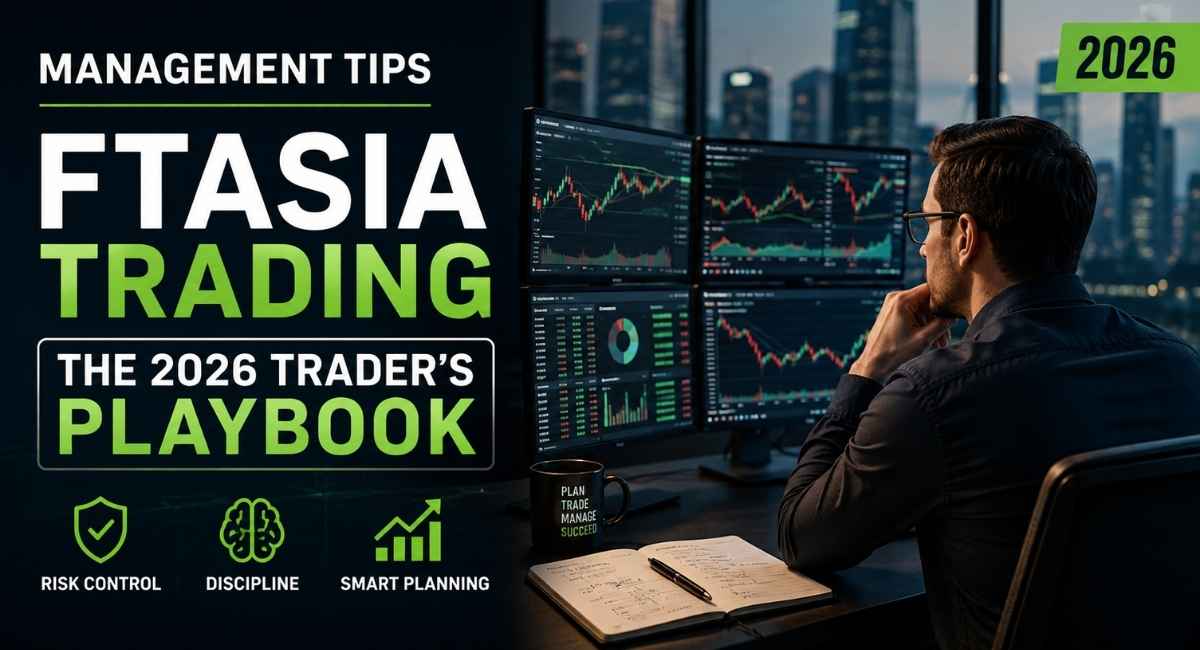
Management tips FTAsiaTrading are built on one simple idea: trading success is not an accident. It is the result of a repeatable trading management framework that combines clear goals, disciplined risk control, smart use of technology, and steady emotional discipline. Traders who follow a structured trading plan consistently outperform those who trade on instinct alone, especially when financial markets face rising volatility and uncertainty.
This guide breaks down nine practical strategies you can apply immediately, whether you manage your own portfolio or lead a trading team. Each section is written from real trading and risk management practice, not theory, so you can turn these ideas into daily habits.
Quick Answer
If you only have two minutes, here is the core of smart trading management:
- Set SMART, process-focused trading goals instead of vague profit targets
- Protect capital first through position sizing, stop-loss orders, and diversification
- Use data-driven decision-making backed by technical, fundamental, and sentiment analysis
- Automate repetitive trading operations to reduce operational risk and human error
- Track every trade in a trading journal and review performance metrics weekly
- Build a pre-trading routine and checklist you follow without exception
- Control emotional bias so fear and greed never override your trading plan
- Strengthen team accountability, communication protocols, and trader training
- Treat continuous improvement as a permanent part of your trading routine, not a one-time fix
What FTAsiaTrading Management Really Means (And Why It Goes Deeper Than You Think)
Most traders think management only means picking the right entry and exit points. In reality, trading management covers the entire system around your trades: how you plan, how you control risk, how you use technology, and how you review results.
A strong trading management framework treats trading like a business. It has goals, a budget for risk, operational processes, and performance reviews. This shift in mindset is what separates traders who survive market cycles from those who blow up their accounts during the first serious drawdown.
Three pillars sit at the center of effective FTAsiaTrading management:
- Strategic planning that defines what you are trying to achieve and how
- Risk management that protects your capital when the market moves against you
- Operational efficiency that keeps your trading process consistent, measurable, and repeatable
When these three pillars work together, trading performance becomes far more predictable, even during periods of market uncertainty.
Setting Clear Goals: The Foundation of Smart Trading Management
Every solid trading plan starts with clear trading goals and objectives. Vague ambitions like “make more money” give you nothing to measure and nothing to correct.
Use SMART Goals, Not Wishes
SMART goals are Specific, Measurable, Achievable, Relevant, and Time-bound. Applied to trading, that might look like:
- Limit account risk to 1% per trade for the next 90 days
- Achieve a risk-adjusted return target while keeping drawdown under 10%
- Complete a weekly trading review every Friday without exception
Favor Process-Focused Goals Over Outcome-Focused Ones
Outcome goals (“earn 20% this year”) depend on market conditions you cannot control. Process-focused goals (“follow my entry and exit rules on every trade”) depend entirely on you. Traders who build measurable, process-driven objectives into their trading routine tend to develop much stronger long-term trading sustainability, because discipline compounds faster than luck.
A simple goal-setting table can keep this organized:
| Goal Type | Example | Review Frequency |
|---|---|---|
| Risk goal | Cap risk per trade at 1 to 2% of capital | Every trade |
| Process goal | Follow pre-trade checklist 100% of the time | Daily |
| Performance goal | Improve win rate or risk-adjusted returns | Monthly |
| Learning goal | Study one new technical analysis method | Weekly |
The Risk Management Layer Most Traders Skip Entirely
Risk management is the part of trading management that beginners understand least and skip most often. Yet it is the single biggest factor separating traders who last for years from those who do not.
Define Your Risk Parameters Before You Trade
Before entering any position, decide your risk tolerance, your maximum risk per trade, and your account risk limit for the day or week. This is not optional. It is the backbone of capital protection.
Key risk control practices include:
- Position sizing: calculate position size based on account balance and stop-loss distance, not gut feeling
- Stop-loss orders: place them at every entry to define your maximum acceptable loss
- Portfolio diversification: spread exposure across assets, sectors, or strategies to reduce concentrated risk
- Risk assessment and stress testing: regularly test your strategy against volatile or worst-case scenarios
Understand the Different Types of Trading Risk
| Risk Type | What It Means | How to Manage It |
|---|---|---|
| Market risk | Losses from price movement and market volatility | Stop-loss orders, hedging, diversification |
| Operational risk | Errors in trade execution, systems, or processes | Automation, checklists, audits |
| Counterparty risk | Broker or platform failing to fulfill obligations | Use regulated, compliant trading platforms |
Traders who treat risk mitigation as a daily habit, not a reaction to a bad trade, protect their capital far more consistently. This single shift in mindset often does more for trading performance than any new strategy.
Using Technology and Automation to Sharpen Your Trading Edge
Modern trading operations rely heavily on technology integration. Manual tracking, emotional decision-making, and slow trade execution all create unnecessary operational risk that automation can remove.
Build a Data-Driven Trading Process
Data-driven trading combines technical analysis, fundamental analysis, and sentiment analysis to form a complete picture before you act. Relying on a single method leaves blind spots that skilled competitors will exploit.
Practical ways to strengthen this layer:
- Use trading platforms with built-in market analysis tools and price alerts
- Apply algorithmic trading or automated trading systems for repetitive, rule-based entries
- Track performance metrics and trading analytics through clear data visualization dashboards
- Prioritize cybersecurity and regulatory compliance when choosing any trading technology
Automation Reduces Costly Human Error
Automated trading systems execute your trading strategy exactly as programmed, removing hesitation and emotional interference. This improves operational efficiency and cost efficiency, since fewer manual errors mean fewer costly corrections. Automation does not replace judgment. It protects your trading plan from moments when judgment is compromised by fatigue or stress.
Building Emotional Discipline: The Skill Nobody Wants to Talk About
Trading psychology decides more outcomes than most traders admit. Two traders can use the exact same trading strategy and get completely different results, purely based on emotional discipline.
Common Emotional Biases That Damage Trading Performance
- Fear, which causes traders to exit winning positions too early
- Greed, which pushes traders to oversize positions or ignore stop-loss orders
- Revenge trading, which follows a loss with an impulsive, unplanned trade
- Overconfidence, which often appears right after a winning streak
How to Strengthen Trading Discipline
- Keep a trading journal that records not just entries and exits, but the emotions behind each decision
- Set hard risk per trade limits so no single emotional decision can cause major damage
- Step away after a losing streak instead of trying to “win it back” immediately
- Review trading mistakes weekly and separate process errors from bad luck
Emotional discipline is trainable. It grows every time you follow your trading plan under pressure instead of abandoning it.
Building a Daily Trading Routine and Pre-Trade Checklist
A consistent trading routine turns good intentions into repeatable action. Without one, even experienced traders drift back into impulsive decisions during stressful sessions.
A simple pre-trading routine should include:
- Reviewing overnight news and market conditions
- Checking your trading checklist for entry criteria, risk limits, and position size
- Confirming your stop-loss and target levels before entering any trade
- Logging the trade setup in your trading journal immediately after execution
Ending the day with a short performance review, even five minutes, keeps small mistakes from becoming expensive habits.
Team Management, Communication, and Continuous Improvement
For trading desks and firms, individual discipline is not enough. Team performance depends on clear communication workflows, communication protocols, and shared accountability.
Strong team management includes:
- Defined roles and team accountability for every stage of trade execution
- Regular trader training and professional development sessions
- Collaboration tools that keep the whole team aligned on strategy and risk limits
- A culture of continuous improvement, where trading performance analysis leads to real process changes, not just reports nobody reads
Firms that build this accountability framework into daily operations see steadier, more sustainable trading systems over time, because good decisions become standard practice rather than the exception.
Conclusion
Smart trading management is not about predicting every market move correctly. It is about building a trading management framework strong enough to survive the moves you get wrong. Clear goal setting, disciplined risk management, thoughtful use of automation, and real emotional discipline work together to create long-term trading success, not a single lucky trade.
Start small. Pick one strategy from this guide, apply it consistently for the next thirty days, and measure the difference in your trading performance. Sustainable trading success is built one disciplined decision at a time.
FAQs
What is the most important management tip for FTAsiaTrading?
Risk management comes first. Protecting your capital through position sizing and stop-loss orders matters more than any single trading strategy.
How much should I risk per trade?
Most experienced traders limit risk per trade to 1% or 2% of total account capital, keeping account risk low even during losing streaks.
Can automation replace trading psychology?
No. Automation reduces manual errors and emotional interference, but trading discipline and judgment still guide the overall trading strategy.
How often should I review my trading performance?
Review individual trades daily and complete a full performance review weekly to track performance metrics and adjust your trading plan.
What is the difference between a trading plan and a trading strategy?
A trading plan covers your overall goals, risk rules, and routine. A trading strategy is the specific method used to find and execute trades.
Why do traders keep a trading journal?
A trading journal reveals patterns in decision-making, helping traders spot emotional bias and repeated mistakes that hurt trading performance.
Is portfolio diversification necessary for small accounts?
Yes. Even small accounts benefit from spreading exposure across different assets to reduce concentrated market risk and protect capital.

Daniel Carter is a digital content writer and researcher at PrimeTechUpdate, specializing in technology, AI, software, business, travel, and digital trends. He focuses on creating accurate, practical, and easy-to-understand content that helps readers make informed decisions. His work emphasizes clarity, reliability, and a reader-first approach.