
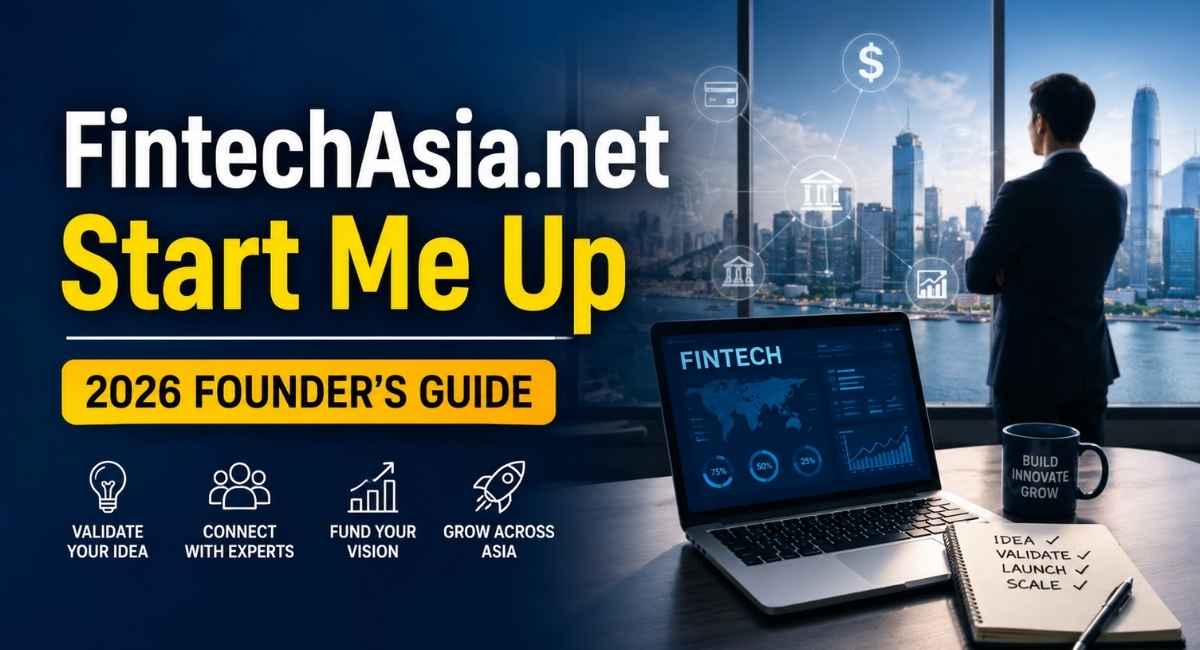
FintechAsia.net Start Me Up has become one of the most searched phrases among early-stage fintech founders looking for direction in 2026. If you have typed this term into Google, you are probably trying to figure out one thing: is this a real startup support platform, or just a buzzy phrase floating around fintech blogs?
This guide answers that question directly. It explains what FintechAsia.net Start Me Up appears to be, what it is not, and pairs that explanation with a practical playbook for anyone trying to launch a fintech startup in Asia. Whether you are a non-technical founder with an idea or a technical co-founder building a product, this article covers the fintech ecosystem, licensing requirements, error-code debugging, and market opportunity you actually need to understand before going live.
What FintechAsia.net Start Me Up Really Is (And What It Is Not)
FintechAsia.net Start Me Up is generally described as a startup support platform and content hub connected to FintechAsia.net, a publication covering financial technology, banking, and startups across the region. Based on publicly available descriptions, it functions more like an informational and networking resource than a formal accelerator or licensed investment vehicle.
Here is a realistic breakdown:
What it appears to offer:
- Founder guidance and fintech education content for early-stage teams
- Fintech market insights covering digital payments, lending, and regulation
- Startup networking opportunities through events, webinars, and community access
- Exposure to investor connections, including venture capitalists and angel investors
- A platform to showcase fintech startup companies to a wider audience
What it is not:
- It is not a licensed bank, lender, or regulated financial institution
- It does not guarantee funding, investor readiness certification, or a fintech license
- It should not replace legal, compliance, or regulatory advice from a licensed professional
Because public documentation about the platform is limited, founders should independently verify ownership, terms of use, and any partnership claims before sharing sensitive business information. Treat FintechAsia.net Start Me Up as a starting point for fintech education, not a substitute for due diligence.
Key Features and Benefits of FintechAsia.net Start Me Up
Founders researching this startup support platform usually want to know what tangible value it adds to the founder ecosystem. Based on how the platform positions itself, these are the recurring benefits worth understanding.
| Feature | What It Offers Founders |
|---|---|
| Fintech mentorship | Access to experienced professionals for founder guidance on product and strategy |
| Investor connections | Introductions to venture capital, angel investors, and institutional backers |
| Startup networking | Pitch events, webinars, and community meetups across Asia-Pacific fintech market |
| Fintech market insights | Reports and trend analysis on digital banking, wealthtech, and regtech |
| Visibility support | A showcase for fintech startup companies that lack marketing budgets |
For founders building outside major hubs like Singapore or Hong Kong, this kind of exposure matters. A strong product idea in mobile banking or micro-lending can go unnoticed without access to the right startup investor network. Platforms positioned around founder ecosystem building exist to close that gap, even when their exact operational structure isn’t fully documented.
What Is a Fintech Startup? The Full Form and Meaning Explained

A fintech startup is an early-stage company that uses technology to deliver, improve, or automate financial services. The term “fintech” combines “financial” and “technology,” and a fintech startup typically applies software, data, and APIs to solve a specific financial problem that traditional institutions handle slowly or expensively.
Fintech startups generally fall into these categories:
| Category | What It Covers |
|---|---|
| Digital payments | Payment gateways, payment processors, digital wallets, cross-border payments |
| Digital banking | Neobanks, embedded finance, banking-as-a-service |
| Lending technology | Micro-lending, buy-now-pay-later, peer-to-peer lending, AI credit scoring |
| Wealthtech | Robo-advisory, investment apps, portfolio automation |
| Insurtech | Digital insurance underwriting and claims automation |
| Regtech | Fintech regulatory compliance, KYC compliance, AML compliance tools |
| Remittance platforms | Cross-border transfers and international payment infrastructure |
A fintech idea only becomes a viable fintech startup once it solves a real financial problem for a defined target market, and that problem is validated through actual user validation, not assumptions. Early traction, even in small volumes, signals to investors that market validation is underway.
The Error Code Problem: What Fintechasia Error Codes Tell You About Fintech Infrastructure
Anyone researching FintechAsia.net Start Me Up will likely also encounter references to fintechasia error codes. These matter more than they seem, because they reveal something founders often underestimate: fintech products live or die on infrastructure reliability.
Fintechasia error codes typically fall into five categories:
- Authentication errors – expired tokens, incorrect credentials, failed two-factor checks
- Payment decline codes – insufficient funds, expired cards, suspected fraud
- Transaction timeouts – slow responses between payment providers and banks
- Compliance errors – transactions blocked by KYC checks, AML checks, or restricted-country rules
- API and integration errors – malformed requests, rate limits, or misconfigured payment API integration
| Error Type | Common Cause | Founder Action |
|---|---|---|
| Authentication failure | Expired session or token | Rebuild token refresh logic |
| Payment decline | Insufficient funds, invalid card | Improve error messaging for users |
| Timeout | Partner or bank server delay | Add retry logic with backoff |
| Compliance block | Failed KYC/AML screening | Review compliance triggers with legal counsel |
The lesson for founders building financial APIs is simple: resilient fintech products are not built by avoiding errors, they are built by handling them gracefully. Every payment decline or authentication failure is a moment where user trust is either protected or lost. Founders who invest early in clean error handling, transparent messaging, and solid technology infrastructure avoid costly churn later.
Fintech Licensing and Regulatory Requirements Across Asian Markets
Fintech regulations are not uniform across Asia, and this is where many first-time founders get stuck. Regulatory requirements are market-by-market, and understanding them early prevents expensive rebuilds later.
| Market | Key Regulator | What It Oversees |
|---|---|---|
| Singapore | MAS (Monetary Authority of Singapore) | Payment service provider license, e-money license |
| Hong Kong | HKMA | Digital banking and payment infrastructure licensing |
| Hong Kong (securities) | Securities and Futures Commission | Wealthtech and securities license activity |
| Indonesia | OJK registration | Lending license, digital financial services approval |
| Philippines | BSP approval | E-money, payments, and digital banking authorization |
Before building, founders should map out:
- Which financial license applies to their specific business model
- Whether a regulatory sandbox is available to test before full licensing
- KYC compliance and AML compliance obligations from day one
- How licensing requirements affect market entry and market expansion timelines
Regulatory awareness is not optional. Fintech startups that ignore the regulatory environment often face shutdowns, fines, or forced pivots, even after raising funding. Building compliance into the product from the MVP stage is significantly cheaper than retrofitting it after launch.
How to Actually Set Up a Fintech Startup: A Practical Setup Guide for 2026
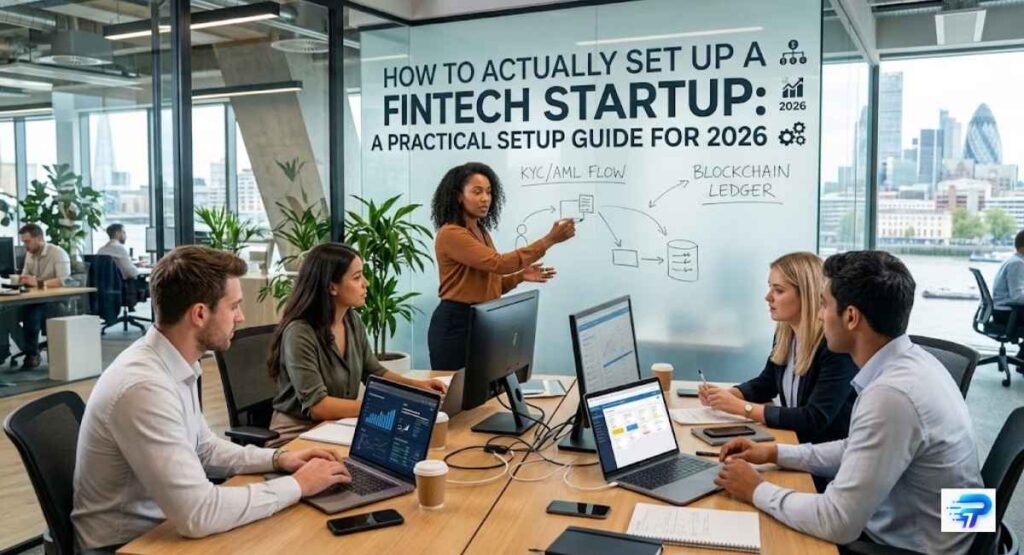
Here is a realistic fintech startup setup sequence for 2026, based on how successful founders in the region actually move from idea to launch.
- Validate the problem, not the idea. Confirm a specific financial problem exists for a defined target market before writing code.
- Talk to 20–30 potential users. Real user validation beats assumptions. Early traction starts with direct conversations.
- Choose your fintech business model. Decide whether you’re building payment infrastructure, lending technology, embedded finance, or a wealthtech product.
- Map licensing requirements early. Identify whether you need a payment service provider license, lending license, or securities license in your target market.
- Build a lean MVP. A minimum viable product should test the core financial workflow, not every feature.
- Integrate financial APIs carefully. Choose payment gateways and payment processors with strong documentation and sandbox environments.
- Prepare for investor readiness. Clean metrics, a scalable business model, and regulatory awareness matter more to investors than a polished pitch deck alone.
- Design a go-to-market strategy. Decide whether you’re targeting underbanked customers, SMEs, or a specific vertical, and build channels around that.
- Plan for fintech scaling. Infrastructure that works for 1,000 users often breaks at 100,000. Build with growth in mind from the start.
Founders should also seek fintech mentorship and strategic partnerships wherever possible. Corporate partnerships with banks or payment providers can accelerate market entry far faster than building every capability in-house.
Why Asia Is the Right Place to Launch a Fintech Startup in 2026
The Asia-Pacific fintech market remains one of the fastest-growing regions globally, driven by a combination of financial inclusion needs and rapid digital payment adoption.
Key reasons founders are choosing Southeast Asia fintech, South Asia fintech, and East Asia fintech markets in 2026:
- Large underbanked populations create genuine demand for digital banking and micro-lending
- Mobile-first behavior accelerates adoption of digital wallets and embedded finance
- Government-backed regulatory sandboxes in markets like Singapore and Indonesia lower the barrier to testing new products
- Growing venture capital interest in AI-powered fintech, regtech, and cross-border payments
- Strategic partnerships between startups and established banks are becoming more common, speeding up trust-building with users
The Asia fintech ecosystem also benefits from strong fintech market trends around AI credit scoring and financial inclusion, giving startups a genuine opportunity to serve populations traditional banks have historically ignored. For founders prepared to navigate fintech licensing carefully, the market opportunity is significant.
Conclusion
FintechAsia.net Start Me Up sits at the intersection of fintech education and founder support, offering mentorship, market insights, and networking value to early-stage teams building in Asia. But no platform, resource, or article replaces the fundamentals: validate a real financial problem, understand your regulatory environment, build resilient infrastructure, and design for user trust from day one.
Asia’s fintech ecosystem in 2026 offers genuine opportunity for founders who take licensing, compliance, and product reliability seriously. Use resources like FintechAsia.net Start Me Up for guidance and exposure, but pair that with independent verification, legal counsel, and disciplined product validation before scaling.
FAQs
What is FintechAsia.net Start Me Up?
It is a startup-focused resource connected to FintechAsia.net that offers fintech education, mentorship, and networking support for early-stage founders in Asia.
Is FintechAsia.net Start Me Up a funding platform?
No. It appears to function as an informational and networking hub rather than a licensed investor or lending platform, so funding claims should be independently verified.
What does “fintech startup” mean in full?
A fintech startup is an early-stage company using financial technology to solve a specific financial problem, such as payments, lending, or banking access.
What causes most fintechasia error codes?
Most errors stem from authentication failures, payment declines, transaction timeouts, or compliance checks like KYC and AML screening.
Do I need a license to launch a fintech startup in Asia?
In most cases, yes. Requirements vary by market, and regulators like MAS, HKMA, OJK, and BSP each have distinct licensing rules.
What is the first step in fintech startup setup?
Validate the specific financial problem with real users before building, since market validation reduces the risk of building the wrong product.
Why is Asia considered a strong fintech market in 2026?
Large underbanked populations, mobile-first adoption, and supportive regulatory sandboxes make the Asia-Pacific fintech market attractive for new founders.

Daniel Carter is a digital content writer and researcher at PrimeTechUpdate, specializing in technology, AI, software, business, travel, and digital trends. He focuses on creating accurate, practical, and easy-to-understand content that helps readers make informed decisions. His work emphasizes clarity, reliability, and a reader-first approach.