
Gaming tech companies are no longer just building faster consoles or sharper graphics cards. In 2026, the conversation around gaming tech companies befitgametek reflects a bigger shift: gaming and fitness technology are merging into one connected experience. Players want performance, but they also want games that respond to their body, their health data, and their real movement.
This shift is why terms like befitgametek keep showing up when people search for the future of active gaming. Whether you are comparing gaming hardware, checking gaming software, or trying to understand where the gaming technology ecosystem is heading, this guide breaks down what actually matters, without the filler most articles repeat.
By the end, you will understand what gaming tech companies befitgametek really means, which companies are shaping this space, what real users report in reviews, and how to evaluate any gaming platform before you invest time or money into it.
What Gaming Tech Companies Befitgametek Actually Means (And Why It Matters)
The phrase covers a growing category of companies working at the intersection of gaming, fitness technology, and immersive hardware. Instead of treating gaming and physical activity as separate worlds, this space blends them into one system.
At its core, gaming meets physical activity through:
- Motion-based gaming and motion-tracked games that respond to real movement
- VR fitness setups that turn a workout into an immersive gaming session
- Wearable technology that feeds real-time biometric data into gameplay
- AI-powered gaming systems that adjust difficulty based on player performance, not just player choice
This matters because traditional gaming platforms were built for stillness. A controller in your hand, a screen in front of you, minimal physical engagement. The befitgametek space challenges that model by making physical movement part of the gameplay loop itself.
For gamers, this changes what “performance” even means. It is no longer only about frame rates. It now includes motion tracking accuracy, low latency between movement and on-screen response, and how well a platform handles real-time player analytics without lag or motion discomfort.
Top Gaming Tech Companies Befitgametek: The Big Names Shaping the Industry
Several categories of companies are actively shaping this ecosystem. Rather than naming a single winner, it helps to understand the roles different players fill.
| Company Type | What They Bring | Example Focus Area |
|---|---|---|
| Console and hardware makers | Gaming consoles, motion controllers, processing power | Sony, Microsoft, Nintendo |
| Graphics and chip manufacturers | NVIDIA GeForce RTX, AMD gaming chips | High-fidelity rendering, ray tracing |
| Engine developers | Unreal Engine 5, Unity Engine, CRYENGINE | Physics simulation, environmental simulation |
| Cloud streaming platforms | GeForce NOW, remote game processing | Cloud gaming accessibility |
| Fitness and motion tech | VR fitness rigs, wearable sensors, biometric gaming | Active gaming companies |
What makes companies operating in the befitgametek space distinct is that they do not fit neatly into one row. They borrow from all five categories at once, combining gaming hardware, gaming software, and health-integrated gaming into a single product line.
This cross-category approach is exactly what companies powering modern gaming are racing toward. Pure hardware companies are adding fitness sensors. Pure fitness brands are adding game engines. The lines are blurring on purpose.
Gaming Tech Companies Befitgametek Reviews: What Users Actually Experience
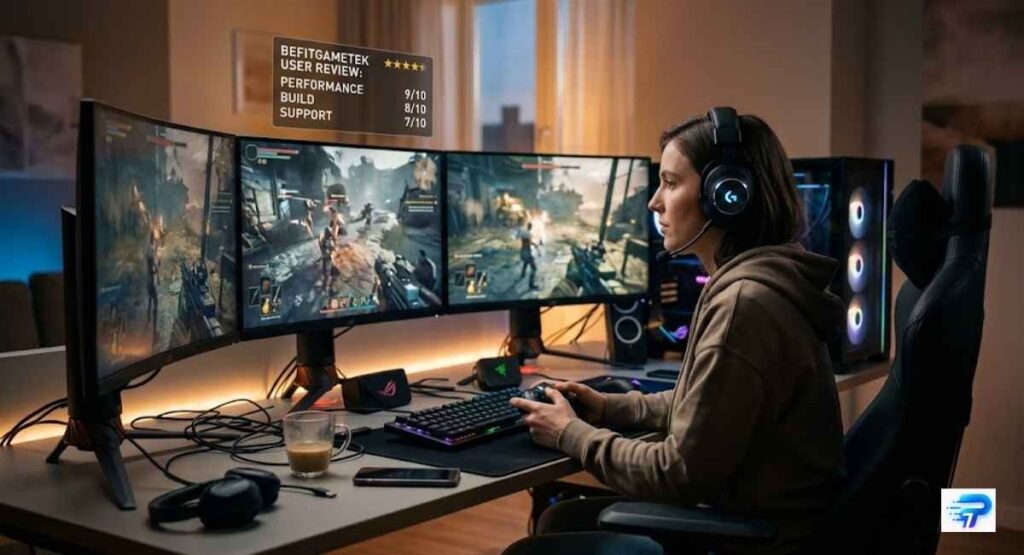
Reviews across forums, app stores, and community threads tend to repeat a few consistent themes. Rather than generic praise, real feedback clusters around specific, testable experiences.
What users like:
- Motion tracking that feels accurate during fast movement, not just slow gestures
- Full-body VR fitness sessions that genuinely feel like immersive active gaming, not a gimmick
- Personalized workout programs generated from actual gameplay data, not static templates
- Cross-platform compatibility that lets progress carry over between a console and a mobile gaming app
What users complain about:
- Motion discomfort during longer sessions, especially with lower-end headsets
- Inconsistent low latency, where the game environment understanding lags slightly behind real movement
- Confusing data privacy policies around health data and fitness data collection
- Hardware cost barrier, since full-body VR fitness setups remain expensive for casual users
One pattern stands out. Users rarely complain about the idea of fitness gaming itself. Most frustration comes from execution gaps, like motion tracking accuracy or unclear health data policies, not the concept of blending gaming and fitness technology.
Data Privacy and Health Data: What Fitness Gaming Users Should Know
Because health-integrated gaming platforms collect heart rate tracking, movement speed, and calories burned, data privacy deserves direct attention.
Before trusting any platform with biometric-responsive gameplay, check three things:
- Data collection scope: Does the platform only use heart rate and movement data for gameplay, or does it also sell aggregated health metrics to third parties?
- Data storage and retention: How long is your fitness data kept, and can you request deletion?
- Transparency of policies: Are health data policies written in plain language, or buried in legal text designed to be skipped?
Serious gaming tech companies treat data privacy as a trust issue, not a checkbox. Platforms that clearly explain their data collection and storage and retention practices tend to earn stronger long-term user experience scores, because players stop worrying about what happens to their biometric gaming data in the background.
What Competitors Miss: The AI and Fitness Data Layer Driving the Next Wave
Most articles covering this topic stop at hardware. They describe VR headsets, motion controllers, and gaming PCs, then move on. What gets missed is the AI personalization layer running underneath all of it.
Machine learning is what actually connects fitness data to gameplay in real time. Here is how it works in practice:
- Wearable sensors capture real-time biometric data such as heart rate and movement speed
- AI-driven gaming personalization systems analyze this data instantly
- The game applies dynamic difficulty adjustment based on player behavior analytics, not preset levels
- Personalized fitness challenges are generated automatically, adjusting to how tired or energized a player actually is
This is the real differentiator in health-data-integrated gaming apps. A treadmill-style fitness app tracks steps. A biometric-responsive game changes its entire pacing based on your real condition mid-session.
Player behavior analytics also feed back into game development itself. Studios use aggregated, anonymized player performance data to fine-tune physics simulation, environmental simulation, and difficulty curves before wider release, often through structured A/B testing and live testing during patch cycles.
This is the layer most competing content ignores, and it is exactly where the gaming technology ecosystem is headed next.
Gaming Technology Ecosystem in 2026: Hardware, Software, and Cloud Infrastructure Working Together
No single product defines this ecosystem. It works because hardware, software, and infrastructure move together.
- Gaming hardware: consoles, gaming PCs, motion controllers, and wearable technology capturing physical input
- Gaming software: game engines like Unreal Engine 5 and Unity Engine translating that input into responsive gameplay
- Gaming infrastructure: cloud streaming platforms and scalable cloud infrastructure handling remote game processing without adding noticeable lag
- Gaming services: live operations, firmware updates, and ongoing support keeping everything functional after launch
When one layer lags behind, the whole experience suffers. A powerful gaming console paired with outdated firmware still produces motion discomfort. A great game engine paired with weak cloud infrastructure still causes latency spikes during cloud gaming sessions.
This is why evaluating any platform in the befitgametek space means looking at the full stack, not just the headset or controller in your hands.
Best Gaming Tech Companies Befitgametek: How to Evaluate Them Like a Pro
Choosing the right platform is less about brand recognition and more about specific, checkable factors.
Start with platform longevity
Before buying into any ecosystem, check how long the company has supported previous hardware generations.
- Look at funding stability and whether the company has diversified revenue streams
- Check if the company has enterprise gaming clients or business-to-business relationships beyond consumer sales
- Review how many years of firmware updates older devices actually received
Platform longevity is the single best predictor of whether your hardware investment will still matter in three years.
Next, look at the developer ecosystem
A device is only as good as what runs on it.
- Assess content library depth, not just total title count
- Check developer adoption rates and how many developer partners actively build for the platform
- Confirm cross-platform compatibility across mobile gaming, gaming consoles, and cloud gaming accessibility
A strong developer ecosystem signals that the platform ecosystem size will keep growing, which protects your investment long term.
Third, consider how openly the company handles updates and post-launch support
Post-launch behavior tells you more about a company than any launch-day keynote.
Watch for:
- Regular, documented firmware updates rather than silent patches
- Public patch testing and live testing before major updates ship
- Clear communication during live operations, especially after issues are reported
Companies that treat post-launch support as an ongoing responsibility, not an afterthought, consistently outperform competitors on long-term user experience, even when their initial hardware specs are similar.
Conclusion
Gaming tech companies befitgametek represents more than a trend. It reflects where active gaming, fitness technology, and AI-powered personalization are genuinely converging. The winners in this space will not be the companies with the flashiest headset. They will be the ones that get motion tracking accuracy right, handle health data responsibly, and support their platforms years after launch.
If you are evaluating gaming platforms in 2026, prioritize platform longevity, developer ecosystem strength, and transparent post-launch support over marketing claims. That combination, more than any single spec sheet, determines whether a gaming technology ecosystem actually delivers on its promise of immersive, health-integrated gaming.
Frequently Asked Questions
What does befitgametek mean in gaming?
It refers to the growing category of gaming tech companies blending fitness technology, motion-based gaming, and AI personalization into one connected experience.
Is fitness gaming actually effective for exercise?
Full-body VR fitness and motion-tracked games can raise heart rate and calories burned meaningfully, though intensity varies by platform and session length.
What should I check before buying VR fitness hardware?
Check motion tracking accuracy, hardware cost, data privacy policies, and how long the company has supported previous devices.
Does cloud gaming work well for motion-based games?
It can, but low latency and scalable cloud infrastructure are essential, since delayed response ruins motion-tracked gameplay.
Are health data and fitness data safe with gaming companies?
It depends on the platform. Always review data collection, storage and retention policies before connecting wearable sensors or biometric data.
What is the biggest factor in choosing a gaming tech company?
Platform longevity and developer ecosystem strength matter more long term than initial hardware specs or launch hype.

Daniel Carter is a digital content writer and researcher at PrimeTechUpdate, specializing in technology, AI, software, business, travel, and digital trends. He focuses on creating accurate, practical, and easy-to-understand content that helps readers make informed decisions. His work emphasizes clarity, reliability, and a reader-first approach.
1 thought on “Gaming Tech Companies Befitgametek: 10 Things That Actually Matter for Gamers in 2026”